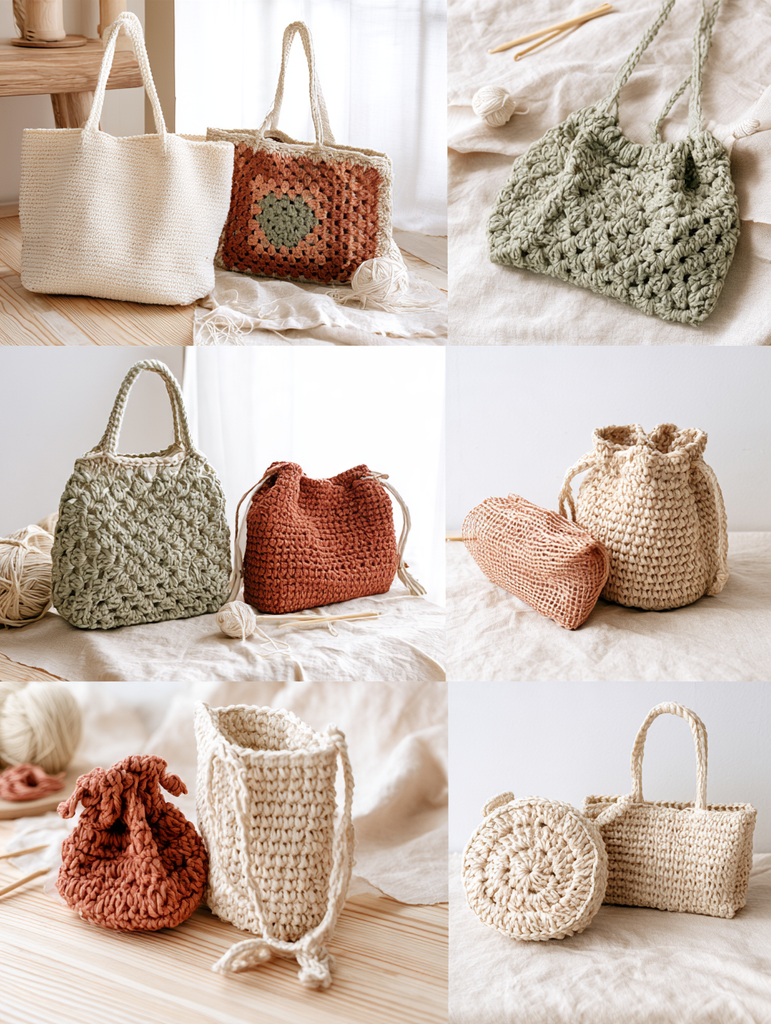
Crochet bags are one of the most satisfying projects you can make because they combine creativity with something genuinely useful.
From roomy market totes to small crossbody purses, a handmade crochet bag can become part of your everyday wardrobe while helping you practice important crochet skills.
Many beginner-friendly crochet bag patterns use simple rectangles, granny squares, basic rounds, and repeating stitches. You do not need advanced garment shaping, and the finished size is often forgiving.
If you are ready to move beyond coasters and small practice pieces, these easy crochet bag ideas are a great next step.

What Makes a Crochet Bag Beginner-Friendly?
The easiest crochet bags usually have simple construction and very little shaping.
Good beginner designs often use:
- Rectangles or squares
- Basic crochet stitches
- Repeating rows or rounds
- Simple handles
- Minimal sewing
- One or two yarn colors
A basic tote can sometimes be made from two rectangles joined together, while granny square bags are created by joining familiar motifs.
Once you understand the basic structure, you can experiment with size, color, texture, straps, and closures.
1. Simple Crochet Tote Bag
A classic crochet tote is one of the best bag projects for beginners.
You can create a rectangular front and back, join the sides and bottom, and then add handles.
Another option is to crochet the bag continuously from the bottom upward.
Keep your first tote simple with a sturdy stitch such as single crochet or half double crochet.
Cotton yarn is a popular choice because it creates a durable fabric that can handle everyday use.
2. Easy Granny Square Bag
If you already know how to crochet granny squares, you can turn them into a beautiful handmade bag.
Make several squares in coordinated colors and join them together.
Try a Yumnivo-inspired palette such as:
- Cream
- Sage green
- Dusty terracotta
- Oatmeal
- Soft mustard
The individual squares make the project feel manageable, and you can carry a few with you to crochet whenever you have time.
3. Beginner Crochet Market Bag
A crochet market bag is practical, lightweight, and often easier to make than it looks.
Many market bags use an open mesh stitch so the fabric stretches when filled.
The base may begin as a circle or oval before the sides are worked upward.
Cotton yarn works particularly well because it is strong and washable.
Use your finished bag for groceries, yarn, books, or trips to the farmers market.

4. Small Crochet Crossbody Bag
A small crossbody bag is a good choice when you want something quicker than a full-size tote.
The main body can be made as a rectangle or small pouch, then finished with a long strap.
Keep the shape simple for your first project.
A crossbody bag is ideal for carrying:
- Phone
- Keys
- Small wallet
- Sunglasses
- Other everyday essentials
Choose a firm stitch so the bag keeps its shape.
5. Easy Crochet Shoulder Bag
A crochet shoulder bag can be simple and stylish.
Many designs use a slightly wider body with a short strap that sits comfortably over the shoulder.
You can make it from two flat panels or crochet it continuously in the round.
Neutral yarn gives the bag a timeless look, while a textured stitch can add interest without needing complicated construction.
6. Crochet Drawstring Bag
Drawstring bags are extremely useful and relatively easy to construct.
Crochet a simple pouch, create small openings around the upper edge, and thread a cord or crocheted chain through them.
Pull the cord to close the bag.
Small versions can hold jewelry or gifts, while larger versions work well for everyday items.
A drawstring bag is also a useful project for practicing crocheting in the round.
7. Crochet Bucket Bag
A bucket bag combines a round or oval base with straight sides.
The shape looks polished but can still be beginner-friendly.
Once the base reaches the correct size, the sides are usually worked without additional increases.
Finish the bag with a drawstring or simple handles.
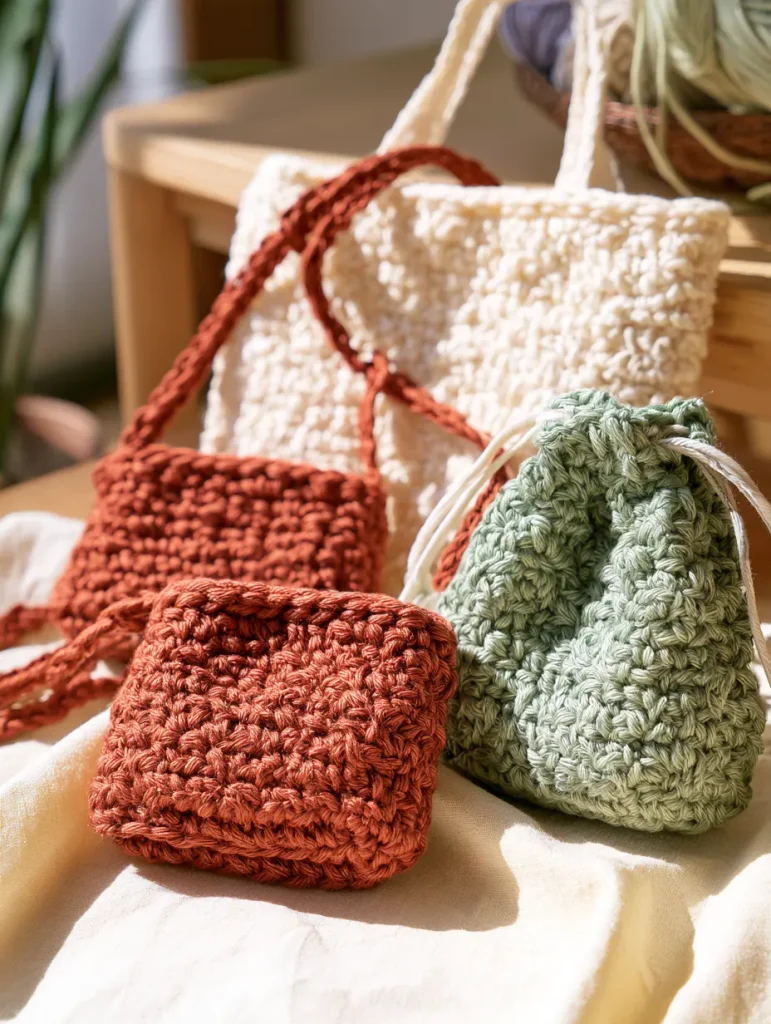
A warm neutral or sage bucket bag can easily become an everyday accessory.
8. Easy Crochet Clutch
A clutch is one of the simplest crochet bags to construct.
Make a long rectangle, fold part of it upward to form the pouch, and leave the remaining section as a flap.
Sew the sides together and add a button or other simple closure if desired.
Because the bag is small, you can experiment with textured stitches without committing to a large project.
9. Crochet Phone Bag
A crochet phone bag is essentially a narrow pouch with a long strap.
It requires very little yarn and can be completed relatively quickly.
This is a great project for leftover cotton yarn.
Make the pouch slightly larger than your phone so it slides in and out comfortably.
You can also add a small button or flap for extra security.

10. Easy Crochet Beach Bag
A crochet beach bag should be roomy enough for towels, sunscreen, a book, and other essentials.
Open mesh patterns work especially well because they create a lightweight bag while using less yarn.
Choose cotton or another practical washable fiber.
Long comfortable handles make the finished bag easier to carry.
Use cream, beige, sage, or coastal blue for a relaxed summer look.
11. Crochet Project Bag
Why not crochet a bag for your crochet?
A project bag can hold:
- Yarn
- Hooks
- Stitch markers
- Scissors
- Current work in progress
Choose a roomy shape with a stable base.
A drawstring or simple tote construction works especially well.
You can also add internal pockets later if you become comfortable modifying patterns.
12. Crochet Mini Bag
Tiny crochet bags are fun, quick, and perfect for leftover yarn.
They can become:
- Keychains
- Gift decorations
- Doll accessories
- Coin pouches
- Small keepsakes
A mini granny square tote is especially cute and gives you practice constructing a bag on a much smaller scale.

13. Crochet Hobo Bag
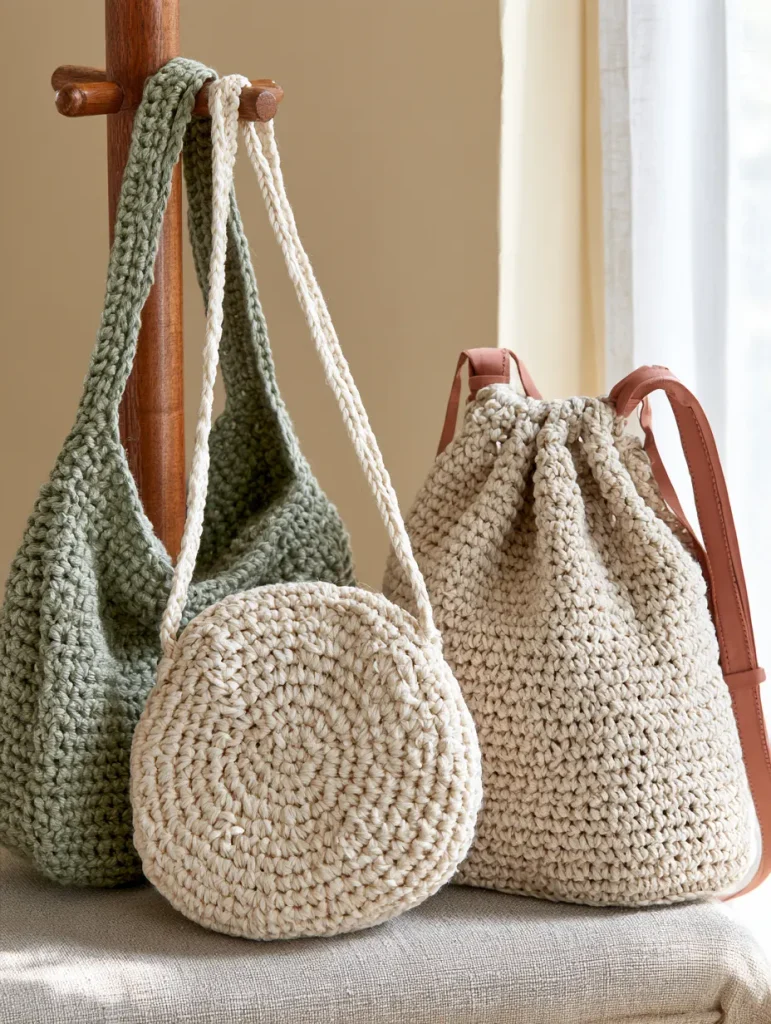
A hobo bag has a soft relaxed shape and usually sits comfortably under the arm.
Choose a simple construction with one wide strap and minimal shaping for a beginner-friendly version.
A loose textured stitch can give the bag beautiful drape.
Use a sturdy yarn so it does not stretch too much once the bag is filled.
14. Crochet Round Bag
A round crochet bag is made by creating two circular panels and joining them around the edge.
Add a strap and leave an opening at the top.
This introduces you to increasing in the round while keeping the overall construction straightforward.
A circular bag looks especially striking in one solid color with a textured stitch.
15. Crochet Backpack
A simple crochet backpack can be surprisingly approachable.
Start with a basic pouch or bucket shape, then add two straps instead of one.
Finish the top with a drawstring or flap.
For your first backpack, choose a simple stitch and avoid too many pockets or decorative pieces.
A sturdy cotton or cotton-blend yarn can help the finished bag maintain its shape.
What Is the Easiest Crochet Bag for a Beginner?
A simple tote made from rectangles is one of the easiest options.
You do not need complicated shaping.
Make two matching rectangles, join three sides, and add handles.
A granny square bag is another approachable choice if you already know how to make granny squares.
Start with a project whose construction you understand before you begin.
What Yarn Is Best for Crochet Bags?
Cotton is one of the most popular fibers for crochet bags.
It is relatively sturdy, washable, and has good stitch definition.
Cotton blends can also work well.
Acrylic yarn can be used for many bags, especially decorative or lightweight projects, but some varieties may stretch more with use.
For bags that need structure, choose a yarn with good strength and limited stretch.
Always follow the yarn recommendations in your specific pattern when possible.
What Crochet Stitch Is Best for Bags?
Dense stitches generally create stronger bag fabric.
Common options include:
- Single crochet
- Half double crochet
- Moss stitch
- Waistcoat stitch
- Textured stitch combinations
Mesh stitches are useful for market and beach bags where stretch and airflow are desirable.
The best stitch depends on how you plan to use the finished bag.
Do Crochet Bags Need a Lining?
Not always.
A tightly crocheted bag may work perfectly well without one.
However, lining can make a bag:
- More durable
- Less stretchy
- Better at holding small items
- More polished inside
If your crochet fabric has large openings, adding a lining prevents items from slipping through.
You can still make plenty of useful beginner bags before learning how to sew a lining.
How Do You Keep a Crochet Bag From Stretching?
Crochet bags naturally stretch somewhat, especially when filled with heavy objects.
A few choices can reduce stretching.
Use firm yarn such as cotton.
Choose a dense stitch.
Use a slightly smaller hook if appropriate for the pattern.
Add a fabric lining.
Reinforce handles.
Avoid making straps unnecessarily long.
For bags that will carry heavier objects, sturdy construction matters more than decorative details.
How Do You Make Crochet Bag Handles Stronger?
Handles receive a lot of stress during everyday use.
Use dense stitches and avoid making the strap too narrow.
You can crochet several rows to create a thicker handle.
Some crocheters also reinforce handles with fabric, cord, or another non-stretch material.
If the handle is worked directly into the body of the bag, make sure the attachment area is strong.
How Much Yarn Do You Need for a Crochet Bag?
The amount varies considerably depending on the bag.
A mini phone pouch may use only a small amount of yarn.
A large market tote or beach bag can require several skeins.
Factors include:
- Bag dimensions
- Yarn weight
- Stitch density
- Handle length
- Number of colors
Check the pattern yardage before beginning and consider buying a little extra if you plan to modify the size.
Should Beginners Add Zippers or Buttons?
You can, but they are not necessary for your first bag.
An open tote is the simplest option.
Drawstrings are also easy to incorporate.
Once you are comfortable with basic construction, experiment with:
- Buttons
- Magnetic closures
- Zippers
- Flaps
- Decorative ties
Build the basic bag first and then add more advanced finishing techniques to future projects.
Beginner Tips for Crocheting Better Bags
Choose the bag’s purpose before choosing the yarn.
A market bag and a phone pouch need very different types of fabric.
Make a gauge swatch when size matters.
Use stitch markers when working in rounds.
Count your stitches regularly.
Check both panels against each other if the design uses separate pieces.
Reinforce handles and attachment points.
Weave in yarn ends securely.
Do not overload the bag beyond what the yarn and construction can comfortably support.
Most importantly, keep your first bag simple enough that you enjoy making it.
Make Something You Can Carry Every Day
There is something especially satisfying about turning a few skeins of yarn into an accessory you can actually use.
Your first crochet bag does not need complicated pockets, hardware, or advanced stitches.
A simple tote, crossbody pouch, granny square bag, or market bag can teach you construction skills that transfer to many future projects.
Choose a style that fits your everyday life, pick a yarn you love, and work through the bag one section at a time.
When you finish, you will have more than another crochet practice piece.
You will have something handmade that can go with you.