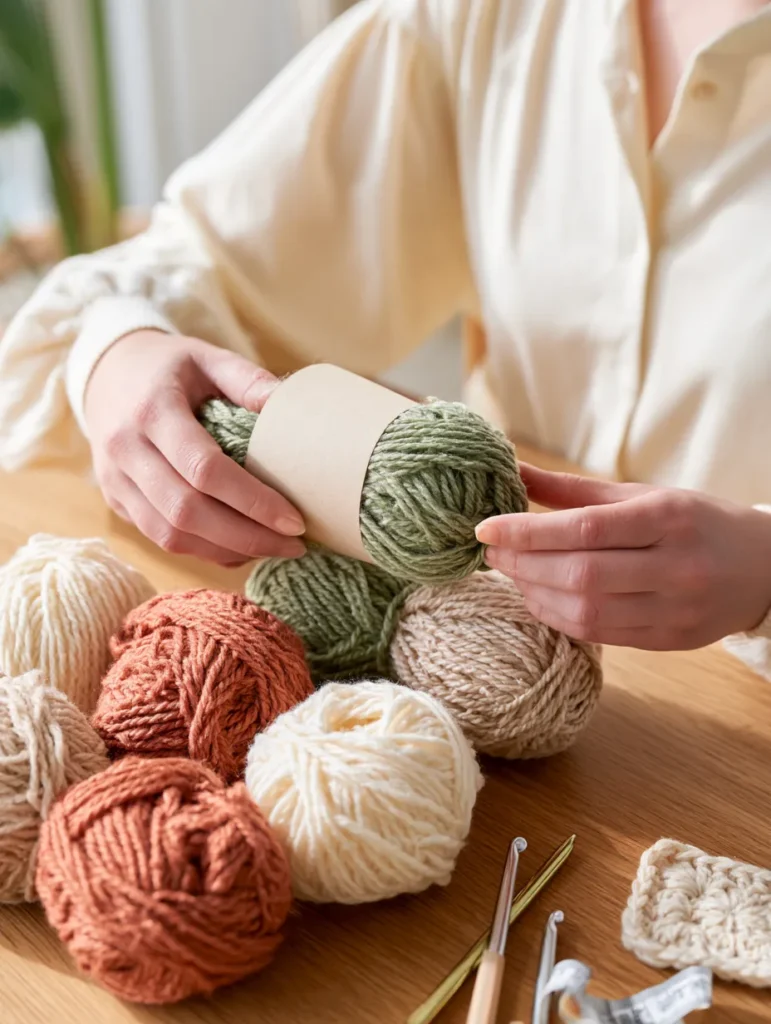
Choosing yarn can feel surprisingly confusing when you are new to crochet.
A craft store may have hundreds of yarns in different colors, thicknesses, fibers, textures, and prices, and almost every label seems to include numbers and symbols you have never seen before.
The good news is that you do not need to understand every type of yarn before starting.
Once you know how yarn weight, fiber, hook size, color, and the information on the label affect your project, choosing yarn becomes much easier.
This beginner guide will help you understand the basics so you can choose yarn with confidence and avoid some of the most common mistakes.
Start With the Pattern
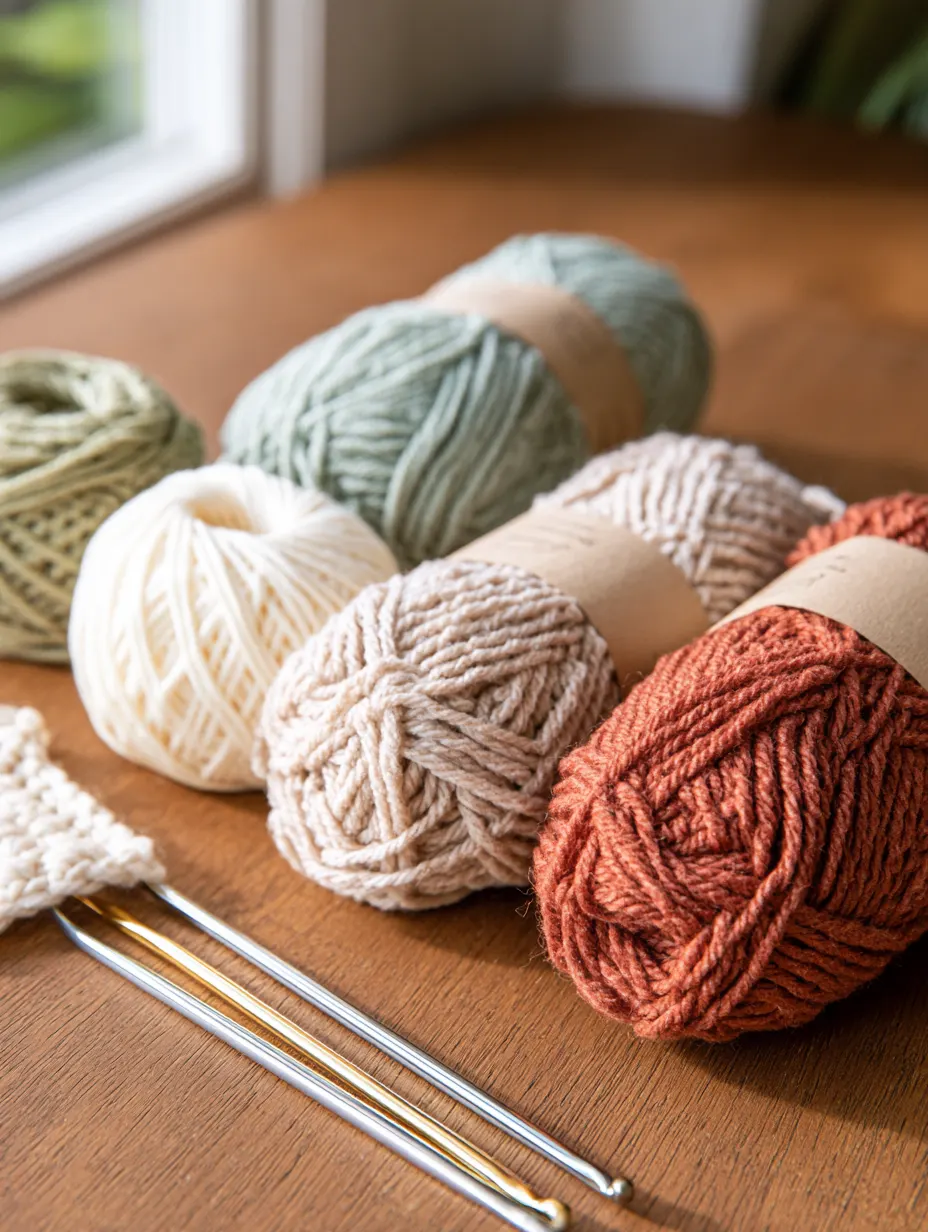
If you are following a crochet pattern, the easiest place to begin is with the yarn information provided by the designer.
A pattern will usually tell you:
- Recommended yarn weight
- Approximate amount of yarn needed
- Suggested crochet hook size
- Fiber used for the original project
You do not always need to buy the exact yarn brand shown in the pattern.
What matters more is choosing a replacement with similar weight, fiber characteristics, and gauge.
For your first few crochet projects, staying reasonably close to the pattern recommendation will make the process much easier.
What Is Yarn Weight?
Yarn weight describes the thickness of the yarn.
It does not mean how heavy the entire ball or skein is.
Thicker yarn generally creates larger stitches and a heavier fabric, while thinner yarn creates smaller stitches and lighter fabric.
A commonly used yarn-weight system includes:
- 0 — Lace
- 1 — Super Fine
- 2 — Fine
- 3 — Light
- 4 — Medium
- 5 — Bulky
- 6 — Super Bulky
- 7 — Jumbo
For beginners, medium-weight yarn, often marked as weight 4, is usually one of the easiest choices.
The stitches are large enough to see clearly without the yarn becoming too bulky or difficult to control.
Which Yarn Weight Is Best for Beginners?
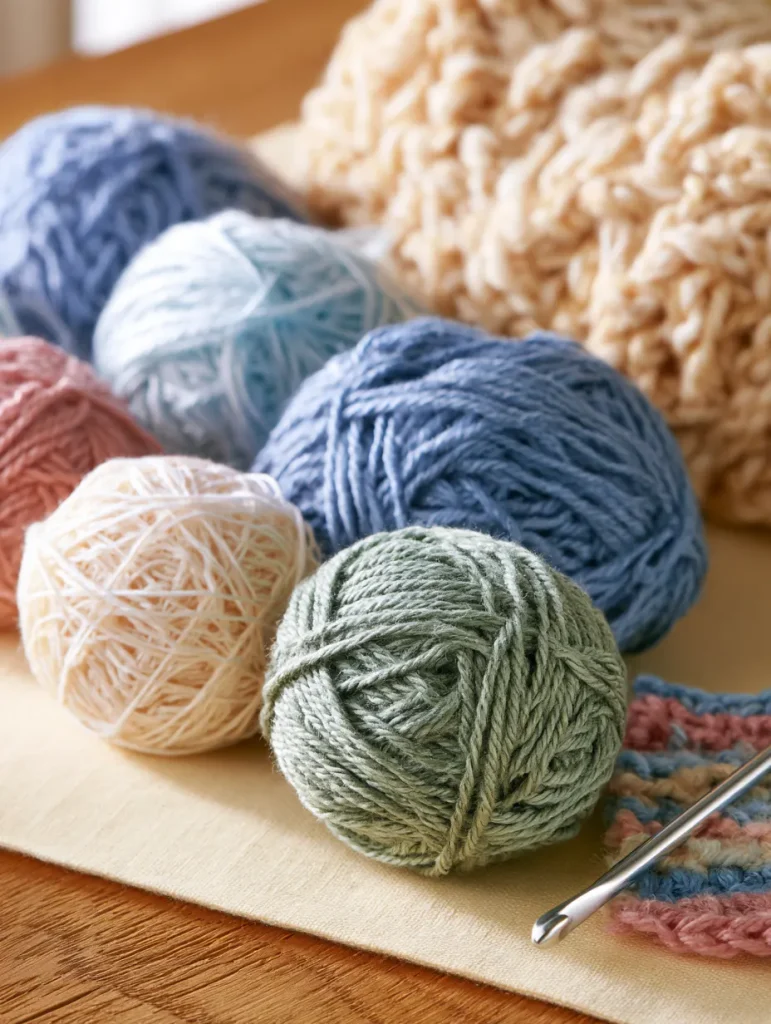
Medium-weight yarn is a comfortable starting point for many new crocheters.
It can work well for:
- Granny squares
- Scarves
- Hats
- Dishcloths
- Bags
- Simple blankets
- Beginner amigurumi
Very thin yarn can make it difficult to identify individual stitches.
Extremely thick yarn creates large stitches, but oversized hooks and bulky fibers can sometimes feel awkward when you are still learning how to control your tension.
A smooth medium-weight yarn gives you a useful balance between visibility and comfort.
Understanding Yarn Fibers
Yarn can be made from natural fibers, synthetic fibers, or blends of several fibers.
Each behaves differently when you crochet with it.
Cotton Yarn
Cotton yarn gives stitches clear definition and usually has less stretch than wool or many acrylic yarns.
It is a useful choice for:
- Dishcloths
- Coasters
- Bags
- Summer projects
- Home decor
Cotton can feel slightly less forgiving because it does not stretch very much, but the clear stitch definition makes it easier to see exactly where your hook needs to go.
Acrylic Yarn
Acrylic yarn is widely available and often affordable.
It comes in a huge range of colors and can be comfortable for beginners.
It is commonly used for:
- Scarves
- Blankets
- Hats
- Practice projects
- Amigurumi
Some acrylic yarn is extremely soft, while other varieties feel firmer or more textured.
If possible, touch the yarn before buying it and choose something that feels comfortable in your hands.
Wool Yarn
Wool is naturally warm and elastic.
It is often used for:
- Sweaters
- Hats
- Scarves
- Winter accessories
The elasticity can make the yarn pleasant to crochet with.
However, wool may need more careful washing and may not be suitable for everyone.
Always check the yarn label for care instructions.
Yarn Blends
Many yarns combine two or more fibers.
Examples include:
- Cotton and acrylic
- Wool and acrylic
- Cotton and bamboo
- Wool and nylon
Blends are often designed to combine useful characteristics from different fibers.
For example, a cotton blend may maintain some of cotton’s structure while feeling softer or more flexible.
How to Read a Yarn Label
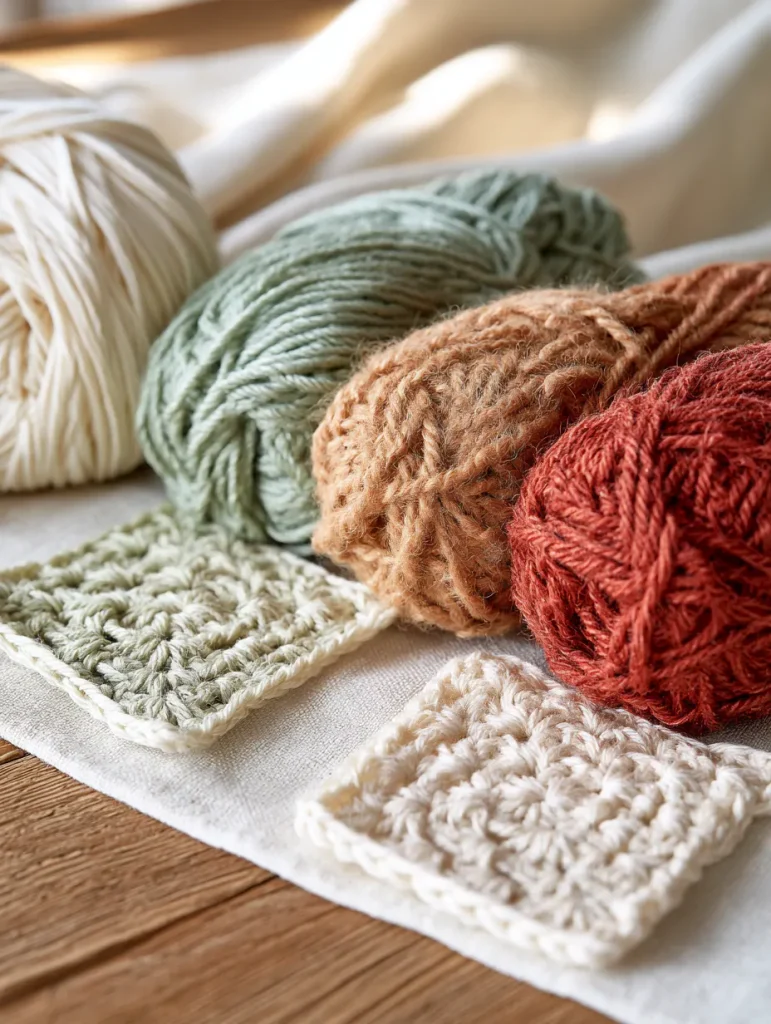
The yarn label contains most of the information you need before starting a project.
Look for:
- Yarn weight
- Fiber content
- Ball or skein weight
- Yardage or meterage
- Recommended crochet hook size
- Washing instructions
- Dye lot
- Suggested gauge
Do not worry if you do not understand every symbol immediately.
For a beginner project, focus first on yarn weight, fiber content, yardage, and the recommended hook size.
What Does the Recommended Hook Size Mean?
Most yarn labels suggest a crochet-hook size that works comfortably with the yarn.
This is a useful starting point, but it is not a strict rule.
A crochet pattern may recommend a different hook because the designer wants a tighter or looser fabric.
For example, amigurumi is normally crocheted quite tightly so the stuffing does not show between stitches.
A scarf may use a larger hook to create a softer fabric with more drape.
When following a pattern, use the pattern’s recommended hook size as your starting point.
How Yarn Color Affects Beginners
Color is not only about appearance when you are learning crochet.
Very dark yarn can make stitches much harder to see.
Black, dark brown, and deep navy may hide the small openings where your hook needs to go.
Very fuzzy yarn can create the same problem.
For your first projects, consider lighter or medium shades such as:
- Cream
- Beige
- Sage green
- Dusty rose
- Light blue
- Soft gray
- Muted mustard
Once you become comfortable recognizing stitches by sight and touch, darker colors become much easier to use.

Avoid Very Fuzzy Yarn at First
Fluffy, eyelash, boucle, and heavily textured yarns can look beautiful, but they often hide individual stitches.
When you are learning, smooth yarn is usually much easier.
You should be able to look at your crochet work and clearly identify:
- The top loops of each stitch
- The spaces between stitches
- The first stitch of the row
- The last stitch of the row
Being able to see the stitch structure makes it much easier to understand what your hook is doing.
Save highly textured yarn for later projects when you feel more confident.
How Much Yarn Should You Buy?
If you are following a pattern, check its required yardage or meterage.
Do not rely only on the number of skeins.
Two yarn brands may both sell medium-weight yarn, but one skein may contain far more yarn than another.
Compare the total yardage instead.
It is generally better to have a little yarn left over than to discover that you are missing a small amount at the end of your project.
What Is a Dye Lot?
Some yarn labels include a dye-lot number.
Yarn made in different dye batches can have slight color variations even when the color name is identical.
For projects that require several skeins, try to buy all of the yarn from the same dye lot.
This is particularly important for:
- Sweaters
- Large bags
- Blankets
- Cardigans
- Other projects with large areas of one color
For very small projects, a tiny shade difference may not matter as much.
Match the Yarn to the Project
The best yarn depends on what you are making.
Before buying yarn, think about how the finished item will be used.
For a dishcloth, washable cotton makes sense.
For a warm winter hat, wool or soft acrylic may be more suitable.
For a sturdy crochet tote, cotton can help reduce stretching.
For a cozy blanket, softness may be more important than structure.
Ask yourself:
- Should the project feel soft?
- Does it need to hold its shape?
- Will it need frequent washing?
- Should it keep you warm?
- Does it need to stretch?
Choosing yarn based on the needs of the project usually gives better results than simply choosing your favorite color.

What Is Gauge?
Gauge describes how many stitches and rows fit into a certain measurement.
For example, a pattern might say that 14 stitches should measure 4 inches.
Your gauge can change depending on:
- Yarn thickness
- Hook size
- How tightly you crochet
- Stitch pattern
Gauge matters most when the final size needs to be accurate.
It is particularly important for sweaters, hats, fitted accessories, and some bags.
If your stitches are too small, try a larger hook.
If they are too large, try a smaller hook.
Do You Need to Buy Expensive Yarn?
No.
Expensive yarn is not necessary for learning crochet.
For your first few projects, it can actually be helpful to use affordable yarn because you may need to unravel and redo stitches several times.
Look for yarn that is:
- Smooth
- Comfortable to hold
- Appropriate for the project
- Easy to see
- Within your budget
Once you understand which fibers and textures you enjoy working with, you can decide where spending more money is worthwhile.
Common Beginner Yarn Mistakes
Choosing Yarn That Is Too Dark
Dark stitches are more difficult to identify when you are still learning.
Using the Wrong Yarn Weight
A much thicker or thinner yarn can completely change the size and feel of a project.
Ignoring Yardage
The same number of skeins does not necessarily mean the same total amount of yarn.
Choosing Very Fuzzy Yarn Too Soon
Heavy texture can hide stitches and make mistakes harder to correct.
Ignoring Washing Instructions
Some handmade projects need frequent washing, so the fiber should suit the intended use.
Buying Too Little Yarn
Running out near the end can be frustrating, especially if you cannot find another skein from the same dye lot.
Choosing Yarn Only Because of the Color
A beautiful yarn is not always suitable for every type of project.
A Simple First-Yarn Recommendation
If you are standing in a yarn aisle and simply want an easy yarn for learning, look for:
- Medium weight, usually number 4
- Smooth texture
- Light or medium color
- Acrylic, cotton, or a simple blend
- A hook recommendation close to the size used in your pattern
Cream, sage green, light gray, or another medium-light color can make your first stitches much easier to see.
You do not need the perfect yarn.
You need yarn that lets you comfortably practice.
Choosing Yarn Gets Easier With Every Project
Every crochet project teaches you something about yarn.
You begin to notice which fibers you like touching, which yarns split easily, which textures create beautiful stitches, and which colors are easiest for you to work with.
Start simple.
Choose a yarn that suits the project, use a smooth fiber you can comfortably control, and read the label before buying.
Before long, a wall filled with yarn will feel less confusing and much more inspiring.