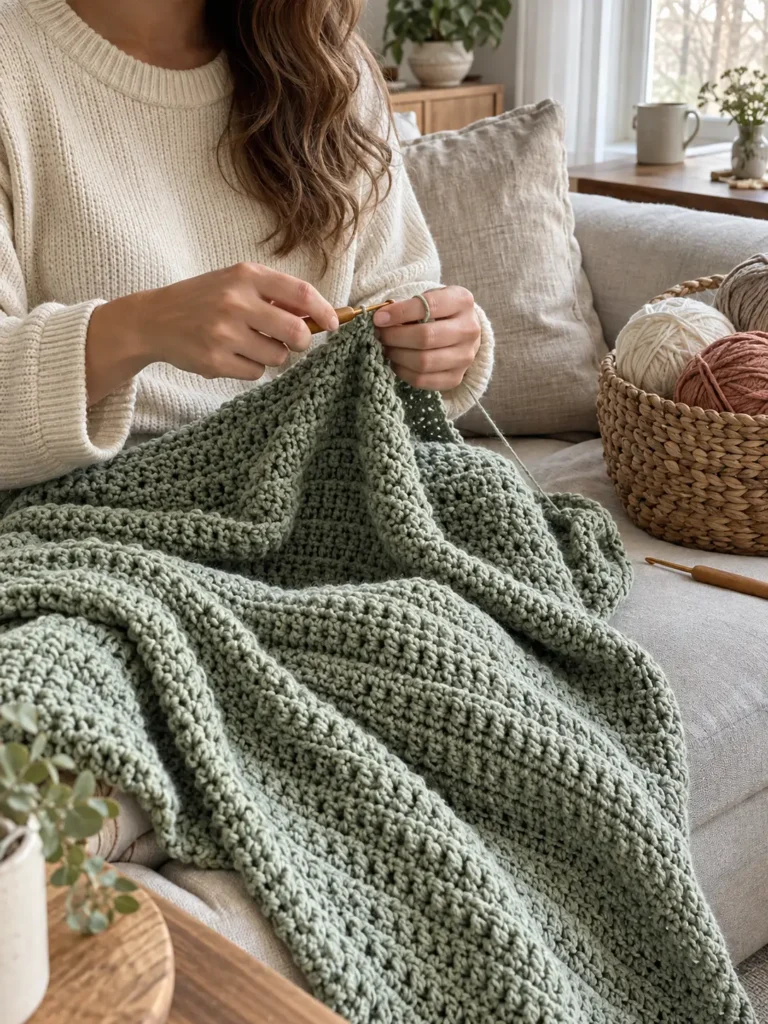
Crochet blankets may look like big projects, but many of them are surprisingly beginner-friendly.
A blanket is often made by repeating the same simple stitch row after row, which gives you plenty of time to practice tension, recognize stitches, and become more comfortable with your crochet hook.
You also do not need to start with a huge throw. A baby blanket, lap blanket, or small couch blanket can be a much more manageable first project.
Below are 10 easy crochet blanket ideas for beginners, starting with some of the simplest constructions.
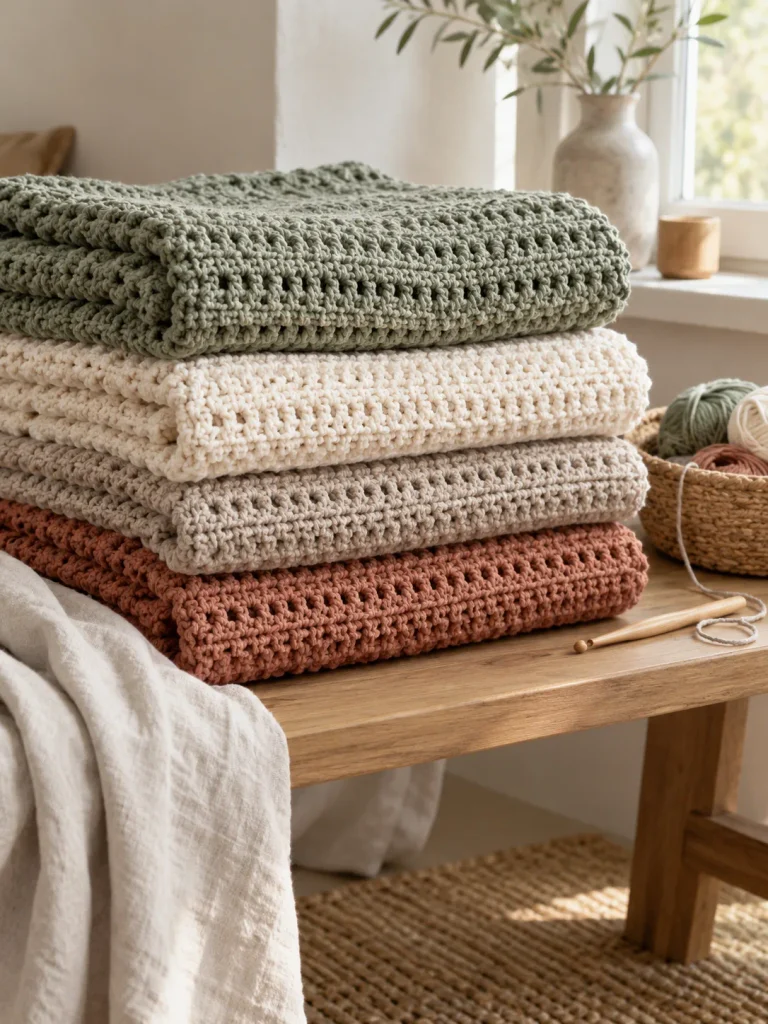
What Makes a Crochet Blanket Beginner-Friendly?
For your first blanket, look for a pattern with:
- One or two basic stitches
- Simple rectangular construction
- Minimal shaping
- Easy row repeats
- Medium or bulky yarn
- A hook large enough to see the stitches clearly
- Few complicated color changes
Blankets made with single crochet, half double crochet, double crochet, moss stitch, or simple granny-style stitches are especially approachable.
What You Need to Crochet a Beginner Blanket
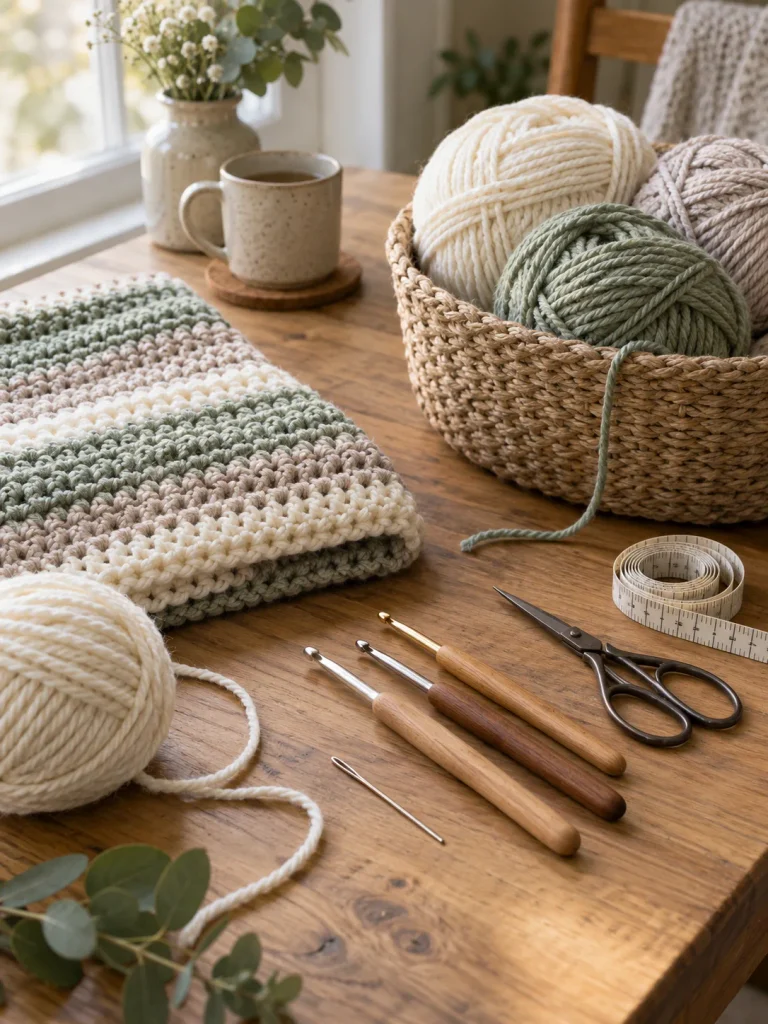
Your exact supplies will depend on the blanket you choose, but most beginner blankets require:
- Yarn
- Crochet hook
- Scissors
- Yarn needle
- Measuring tape
- Stitch markers, optional
For beginners, medium-weight yarn is often one of the easiest choices because the stitches are large enough to see without becoming too bulky.
Bulky yarn is another good option when you want a blanket that grows quickly.
1. Simple Half Double Crochet Blanket
A half double crochet blanket is one of the easiest places to begin.
Half double crochet creates a soft, slightly textured fabric without requiring complicated stitch combinations.
You simply create a foundation chain the width of your blanket and work one half double crochet into each stitch across.
Turn your work and repeat.
Basic idea
Chain until your foundation reaches the width you want.
Work half double crochet across each row.
Continue until the blanket reaches your preferred length.
You can use one color for the entire blanket or change colors every few rows.
A simple sage green or warm cream blanket can look beautiful even without complicated details.
2. Easy Double Crochet Blanket
Double crochet is taller than single crochet or half double crochet, which means the blanket grows faster.
That makes it a great stitch for beginners who want to see progress quickly.
Double crochet also creates a softer and more flexible fabric.
For an easy version, use one color and simply repeat double crochet rows until the blanket reaches the desired size.
You can add a simple border at the end if you want a more finished appearance.
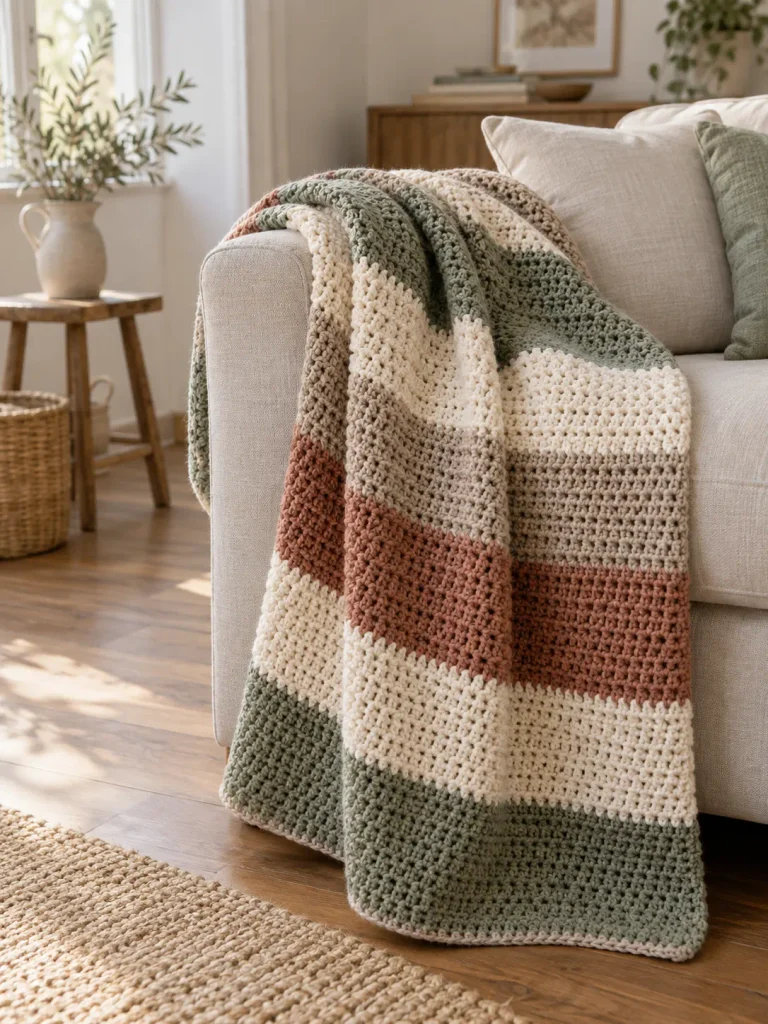
3. Beginner Striped Crochet Blanket
Once you are comfortable making straight rows, stripes are an easy way to make a simple blanket more interesting.
You do not need complicated colorwork.
Simply crochet several rows in one color, change yarn, and continue with another.
A cozy Yumnivo-style palette could include:
- Sage green
- Warm cream
- Oatmeal
- Dusty terracotta
Try wide stripes if you want fewer yarn changes.
For example, crochet six or eight rows in each color before switching.
4. Moss Stitch Crochet Blanket
The moss stitch creates beautiful texture while using only basic crochet techniques.
It is usually created by alternating single crochet stitches and chain spaces.
The result is a fabric with a soft woven appearance.
This stitch works especially well when you want to combine several colors because the texture helps the color changes blend beautifully.
It is also a good project for practicing how to recognize chain spaces.
5. Chunky Crochet Blanket
If you want a blanket that works up quickly, try bulky or super bulky yarn.
Large yarn combined with a larger crochet hook means every stitch covers more space.
That can make a chunky blanket feel much less intimidating.
Keep the stitch simple.
Half double crochet or double crochet is usually enough to create a cozy blanket with plenty of texture.
Chunky blankets look especially beautiful in:
- Cream
- Oatmeal
- Warm beige
- Sage
- Soft gray
Remember that very thick blankets can become heavy, so a smaller lap blanket can be a good first chunky project.
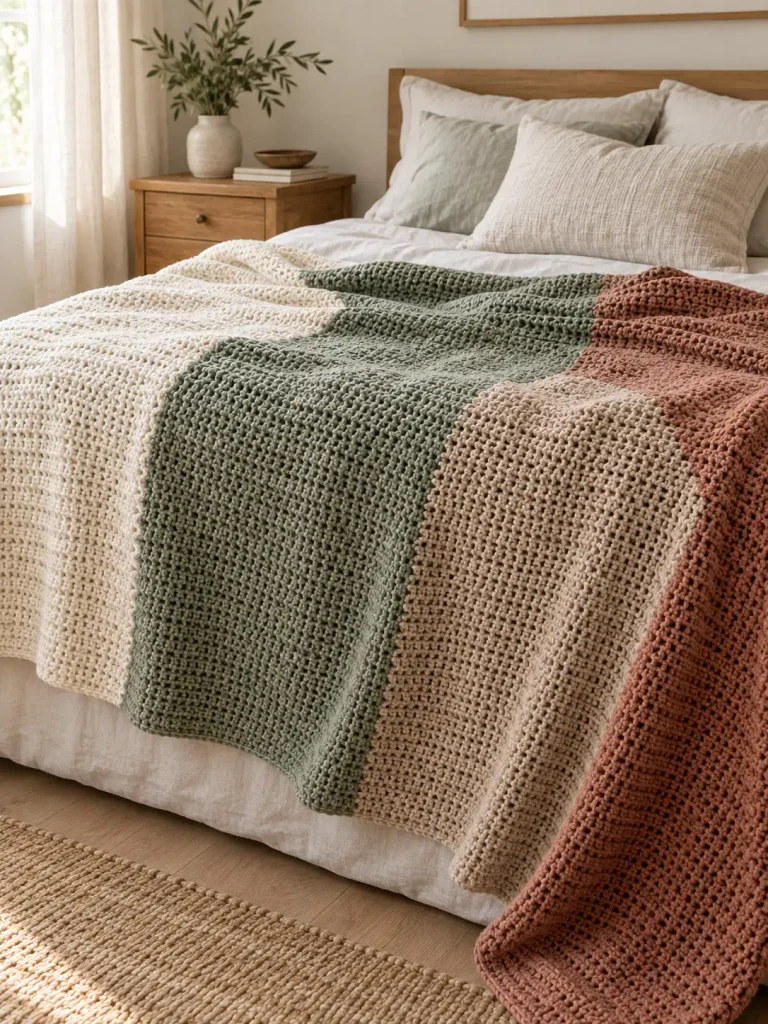
6. Simple Color Block Crochet Blanket
Instead of frequent stripes, divide your blanket into large sections of color.
For example:
- First section: cream
- Second section: sage
- Third section: oatmeal
- Fourth section: dusty terracotta
Because each color section contains many rows, you only need to change yarn a few times.
This creates a modern look while keeping the crochet process very simple.
A color block blanket is especially attractive in minimalist or Scandinavian-inspired interiors.
7. Easy Granny Stripe Blanket
If you like the look of traditional granny squares but do not want to join dozens of individual pieces, try a granny stripe blanket.
Instead of making separate squares, granny-style clusters are worked back and forth in rows.
The repetitive pattern becomes easier once you understand where each cluster goes.
This style is particularly good for using several colors.
You can create:
- Regular repeating stripes
- Random color changes
- Two-color combinations
- Soft neutral palettes
- Bright scrap-yarn blankets
For a first blanket, limit yourself to three or four coordinating colors.
8. Easy Baby Blanket
A baby blanket is a great first blanket because it gives you all the practice of making a full-size blanket without requiring as much yarn or time.
Keep the design simple.
Try:
- Half double crochet
- Double crochet
- Moss stitch
- Simple stripes
Soft washable yarn is usually a practical choice.
Always check the yarn manufacturer’s care instructions, especially for items that may need frequent washing.
Avoid loose decorations, buttons, or other detachable embellishments on blankets intended for babies.
9. Simple Lap Blanket
A lap blanket is another manageable alternative to a large throw.
It can be used while reading, crocheting, watching television, or relaxing on the sofa.
Because it is smaller, you can finish it faster while still practicing long rows and consistent tension.
A simple half double crochet lap blanket in one or two colors is enough to create a beautiful finished piece.
You can also add a contrasting border once the main rectangle is complete.
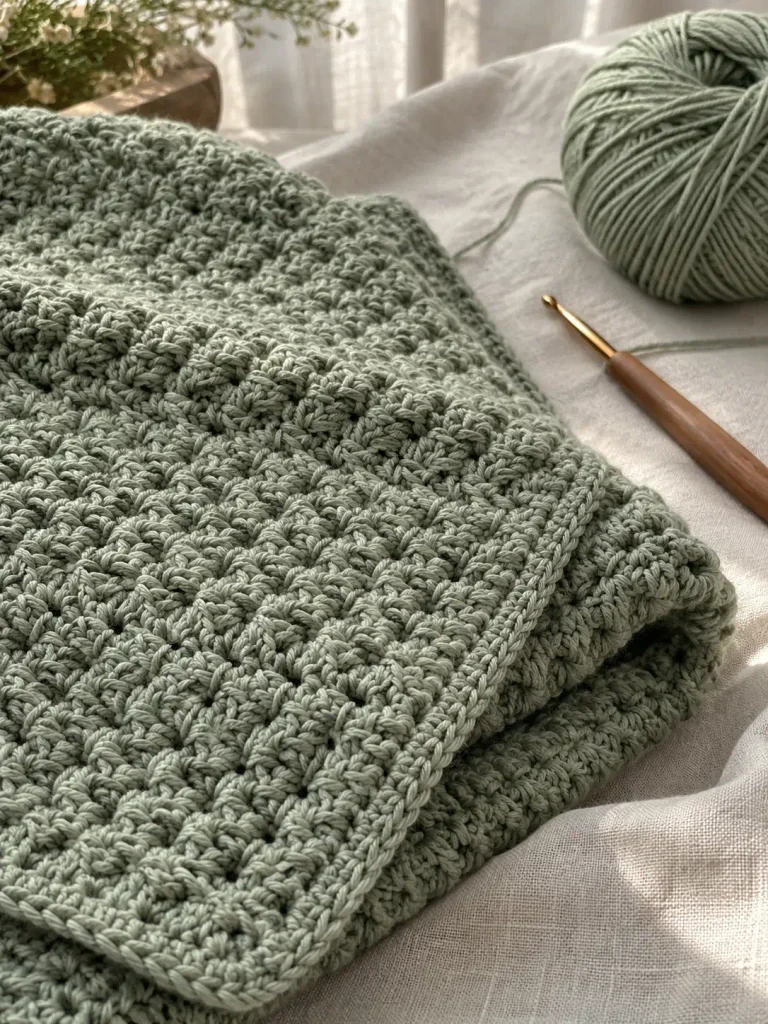
10. One-Color Textured Crochet Blanket
You do not need several yarn colors to make a blanket interesting.
A single-color blanket can look beautiful when the stitch itself creates texture.
Choose a soft neutral or muted shade and allow the stitch definition to become the main feature.
Cream, oatmeal, sage, or muted terracotta all work beautifully.
Using one color also means:
- Fewer yarn ends to weave in
- No color-changing practice required
- Easier yarn planning
- A clean, timeless appearance
Which Blanket Should a Complete Beginner Make First?
If this is your very first blanket, a half double crochet blanket is one of the simplest options.
You only need to learn:
- How to make a foundation chain
- How to make half double crochet
- How to turn your work
- How to identify the first and last stitch
- How to maintain your stitch count
Once those skills feel comfortable, you can introduce stripes or a simple border.
What Size Should Your First Crochet Blanket Be?
There is no rule saying your first blanket must be huge.
Starting smaller can make the project much more enjoyable.
Approximate sizes you might consider include:
Baby blanket: around 30 × 36 inches
Lap blanket: around 36 × 48 inches
Small throw: around 40 × 50 inches
Larger throw: around 50 × 60 inches
These are only general starting points.
Handmade blankets can be customized to almost any size.
How Much Yarn Do You Need?
The amount of yarn depends on:
- Blanket size
- Yarn weight
- Stitch
- Hook size
- Crochet tension
A dense stitch usually requires more yarn than an open stitch.
Instead of relying on one universal number, choose your pattern and yarn first, then calculate the amount based on the yarn manufacturer’s yardage and your chosen blanket size.
Buying all the yarn for the project at the same time can also help reduce differences between dye lots.
Should Beginners Use Light or Dark Yarn?
Lighter and medium colors are often easier when you are learning.
Colors such as:
- Cream
- Beige
- Sage
- Dusty rose
- Light blue
- Soft terracotta
make individual stitches easier to see.
Very dark yarn can make it harder to recognize where the hook should be inserted, especially in low light.
How Do You Keep Blanket Edges Straight?
Uneven edges are extremely common when learning crochet.
Most problems happen because stitches are accidentally added or skipped at the beginning or end of rows.
To help keep your blanket straight:
- Count your stitches regularly
- Use stitch markers on the first and last stitch
- Learn where your turning chain belongs
- Avoid changing your tension dramatically
- Check the width every few rows
Correcting a mistake early is much easier than discovering it twenty rows later.
Why Is My Crochet Blanket Getting Wider?
You may be accidentally adding stitches.
This often happens when a beginner mistakes the turning chain for another stitch or works twice into an edge stitch.
Count your stitches at the end of a row and compare the number with your original stitch count.
Why Is My Blanket Getting Narrower?
You may be skipping stitches, especially the final stitch of each row.
The last stitch can sometimes be difficult to recognize.
Placing a stitch marker in the first and last stitch can make the edges much easier to identify.
Why Is My Crochet Blanket Curling?
Some curling at the beginning can happen because of tension.
A foundation chain that is much tighter than the following rows can pull the bottom edge inward.
If your foundation chain is very tight, try:
- Relaxing your tension
- Using a slightly larger hook for the chain
- Making your chains more loosely
Minor curling can also improve as the blanket grows.
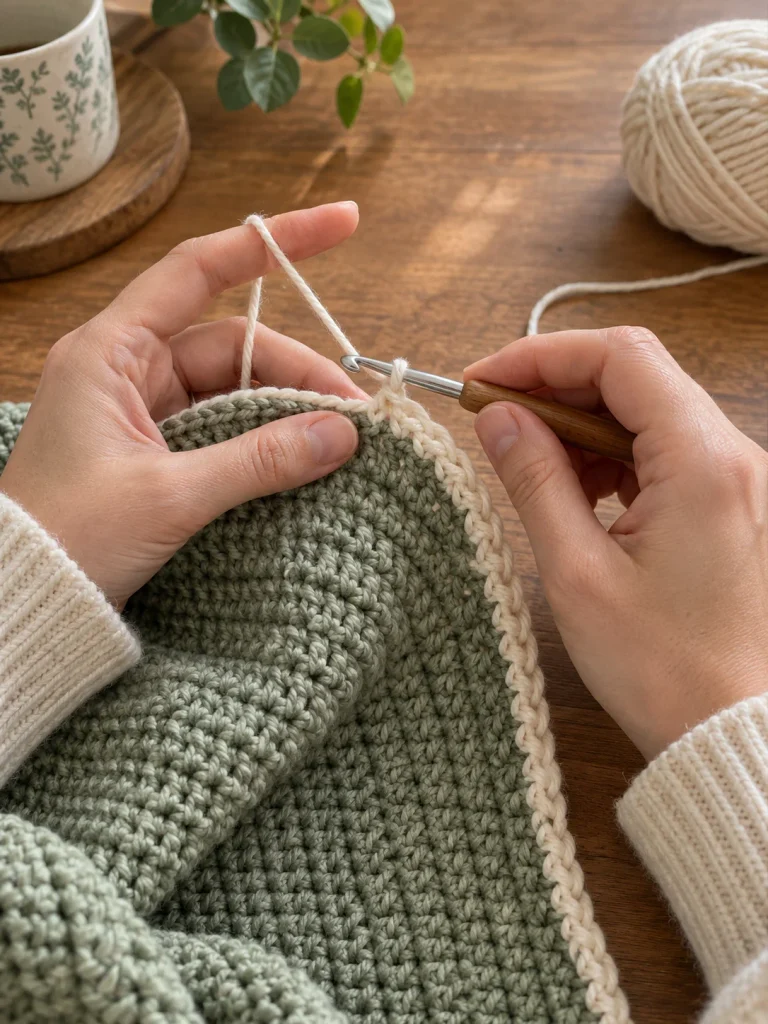
Should You Add a Border?
A border is optional.
A simple blanket can look beautiful without one.
However, a border can help give the edges a cleaner finished appearance.
Beginner-friendly borders include:
- One round of single crochet
- Two rounds of single crochet
- Simple half double crochet border
Keep your first border simple.
You can experiment with decorative borders on later projects.
How Long Does a Beginner Crochet Blanket Take?
The answer varies enormously.
A small blanket made with bulky yarn can grow quickly.
A large blanket made with medium or fine yarn requires considerably more time.
Your crochet speed also increases naturally as your hands become more comfortable with the movements.
Instead of focusing on how quickly you finish, consider setting a small goal.
You might crochet:
- Two rows each evening
- Twenty minutes per day
- One color section each weekend
Large projects become much easier when you think about them one row at a time.
Do Not Worry About Perfect Stitches
Your first blanket may contain slightly loose stitches, tight stitches, uneven rows, or small imperfections.
That is part of learning.
A blanket gives you hundreds or even thousands of opportunities to repeat the same movements.
By the time you reach the final rows, you may notice that your crochet already looks more consistent than it did at the beginning.
That progress is one of the best parts of making your first blanket.
Start With the Simplest Version
You do not need complicated stitches or dozens of colors to create a beautiful crochet blanket.
Choose a yarn you enjoy working with.
Pick one simple stitch.
Make your foundation chain.
Then keep adding rows.
A simple rectangle of repeated stitches can become something warm, useful, and completely handmade.
And once you finish your first blanket, many other crochet projects will suddenly feel much more achievable.