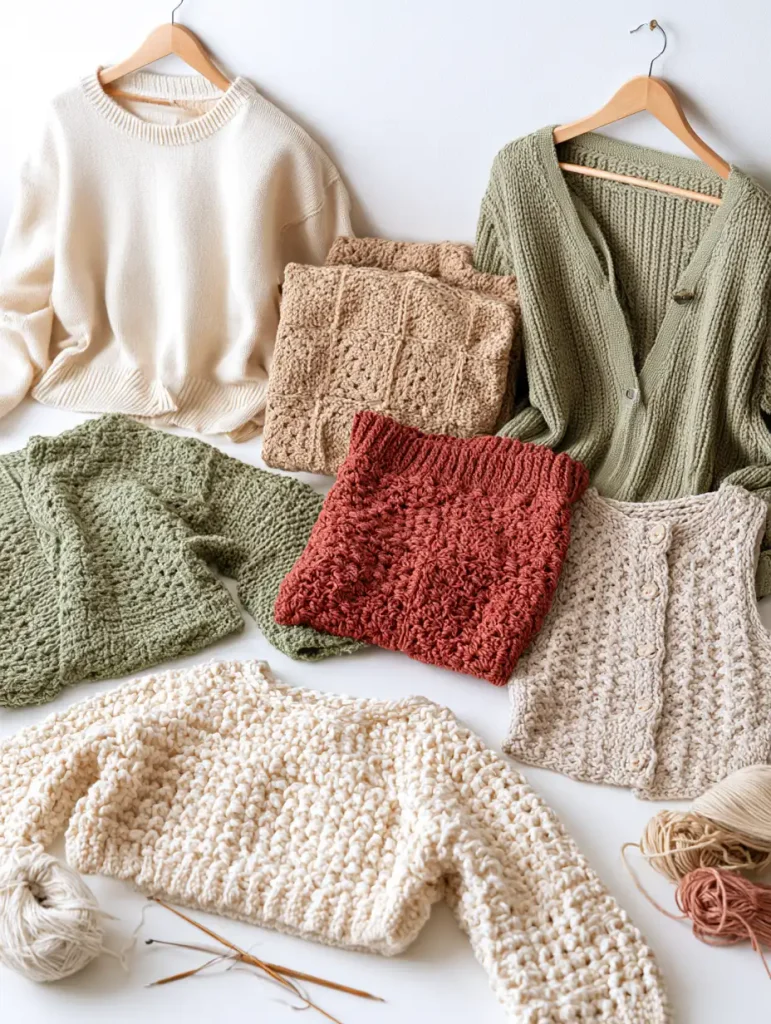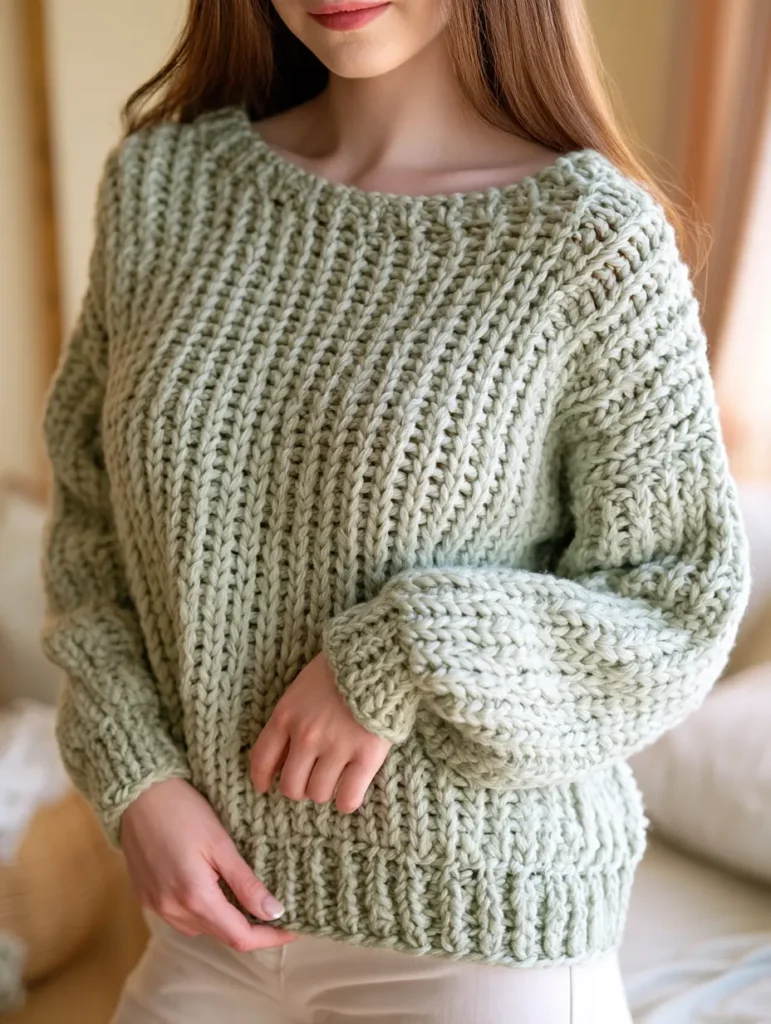
Crocheting your first sweater can seem like a big step, but it doesn’t have to be complicated.
Many beginner-friendly crochet sweaters are built from basic rectangles, simple panels, and repeating stitch patterns. That means you can make something wearable without dealing with advanced shaping right away.
If you already know a few basic crochet stitches, can count your rows, and are comfortable following simple measurements, you may be ready to try your first sweater.
Here are 15 easy crochet sweater ideas that are approachable for beginners and give you plenty of room to build confidence as you go.
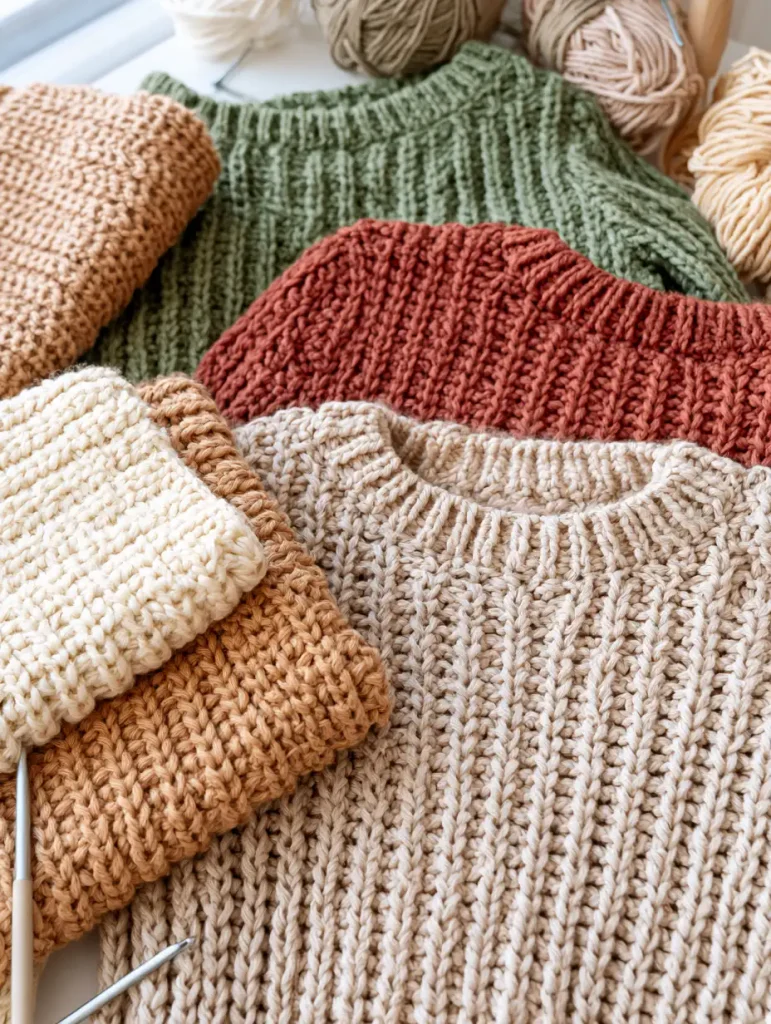
What Makes a Crochet Sweater Beginner-Friendly?
The easiest crochet sweaters usually keep the construction simple.
Look for patterns that use:
- Rectangular panels
- Minimal shaping
- Repeating stitch patterns
- Basic seams
- Simple sleeves
- Few color changes
Sweaters made from several flat pieces can be especially beginner-friendly because you can focus on one section at a time instead of trying to understand the whole garment at once.
Patterns using basic stitches such as single crochet, half double crochet, and double crochet are usually easier to follow too.
1. Simple Drop-Shoulder Crochet Sweater
A drop-shoulder sweater is one of the easiest constructions to start with.
The body is usually made from simple front and back panels, and the sleeves attach lower on the shoulder. That means there is less complicated shaping to worry about.
The relaxed construction also makes the fit more forgiving.
For your first one, choose a soft medium-weight yarn and a simple stitch pattern you already feel comfortable with.
2. Easy Crochet Pullover
A basic pullover can be much simpler than it looks.
Many beginner patterns use rectangular body panels that are joined at the shoulders and sides.
The sleeves can be made separately or worked directly from the armholes.
A slightly oversized fit is often a good beginner choice because it does not require extremely precise shaping.
3. Beginner Crochet Cardigan
A cardigan is a great first sweater because the front stays open.
You usually make:
- One back panel
- Two front panels
- Two sleeves
Then the pieces are joined together at the end.
A simple cardigan also gives you plenty of practice working straight rows and keeping your stitch count consistent.
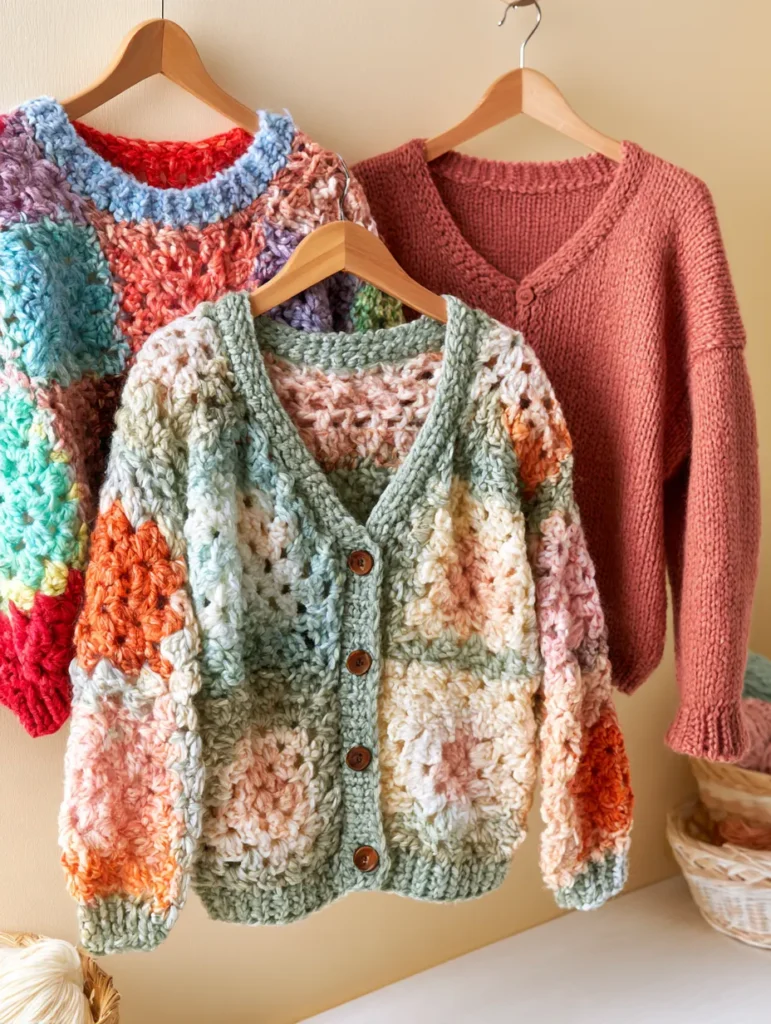
4. Crochet Granny Square Sweater
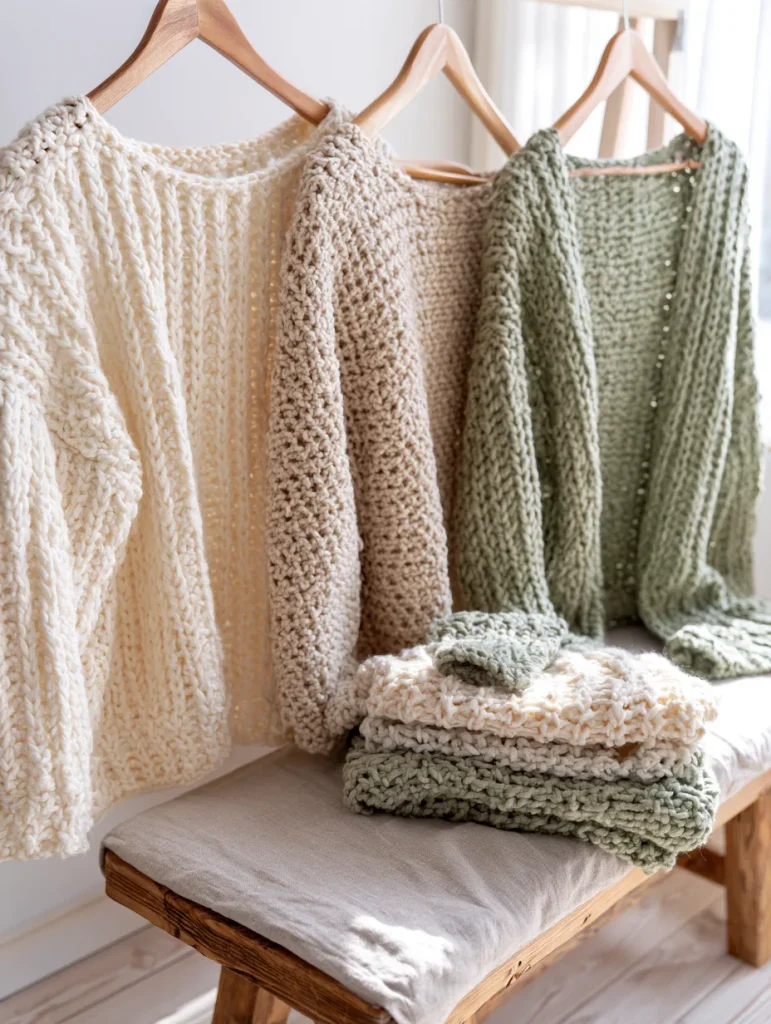
If you already know how to make granny squares, a granny square sweater can be a fun next project.
Instead of crocheting one large fabric panel, you make several smaller squares and join them together.
That makes the project feel more manageable because you can work one square at a time.
It also gives you lots of freedom with color.
For a beginner-friendly version, use a simple layout and stick to a few coordinated shades.
5. Easy Crochet Hexagon Cardigan
Hexagon cardigans look more complicated than they really are.
You crochet two large hexagons, then each one folds to create part of the body and sleeve.
The two pieces are joined together to form the cardigan.
This is a fun choice once you feel comfortable working granny-style clusters in the round.
6. Simple Crochet V-Neck Sweater
A V-neck sweater introduces a little more shaping, but it can still be approachable.
Choose a pattern that creates the neckline gradually with simple increases or decreases.
The rest of the sweater can still be made from straightforward panels.
A clean V-neck looks especially nice in soft neutral or muted yarn colors.
7. Beginner Crochet Turtleneck Sweater
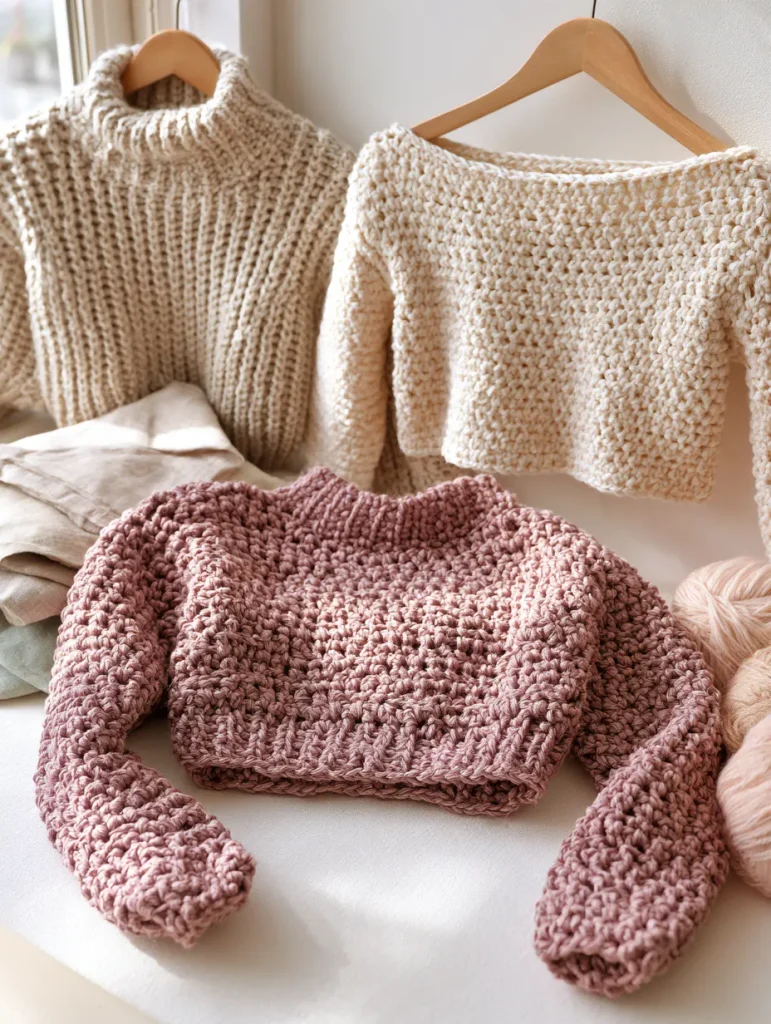
A simple turtleneck can be made by adding a taller collar to an otherwise basic sweater.
Look for a pattern with minimal shaping through the body.
The collar can often be crocheted directly around the neckline after the main sweater is assembled.
A cozy ribbed turtleneck works especially well with thicker yarn.
8. Easy Crochet Cropped Sweater
A cropped sweater is a nice beginner project because there is less fabric to crochet.
The shorter length can make the project feel quicker and more manageable.
Look for a simple boxy construction with straight sides.
Cropped sweaters pair especially well with high-waisted jeans, trousers, or skirts.
9. Simple Crochet Boat-Neck Sweater
A boat-neck sweater has a wide, shallow neckline.
The construction can stay very simple because the neckline often needs less shaping than other styles.
A slightly oversized boat-neck sweater can sometimes be made from basic rectangular panels.
That makes it a comfortable option for a first wearable project.
10. Easy Crochet Raglan Sweater
Raglan sweaters are often worked from the top down.
The shaping creates diagonal lines from the neckline toward the underarms.
Although this introduces increases, the construction can still be beginner-friendly when the pattern follows a simple repeating formula.
One useful advantage of a top-down sweater is that you can often try it on while you are working.
11. Beginner Crochet Bell-Sleeve Sweater
Bell sleeves add personality without making the body construction complicated.
Start with a basic sweater shape, then gradually increase stitches toward the lower part of the sleeve.
That creates the flared shape.
Keeping the body simple lets you focus on understanding the sleeve shaping without adding too many new techniques at once.
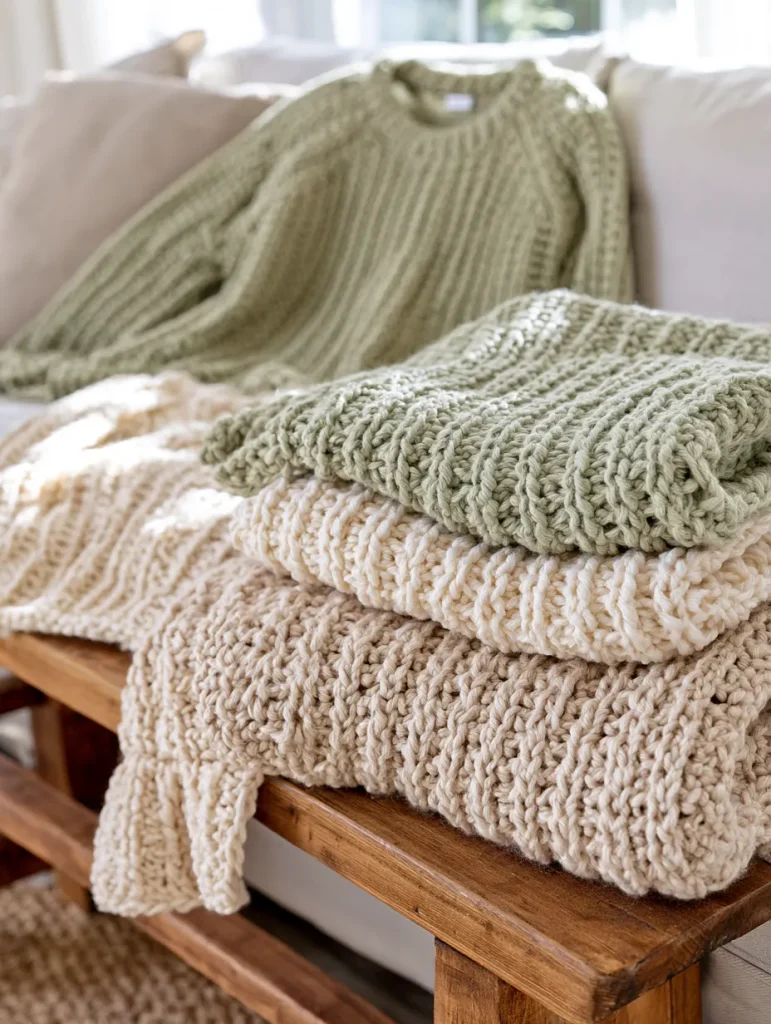
12. Easy Crochet Oversized Sweater
An oversized sweater is one of the most forgiving crochet wearables.
The relaxed fit means small differences in gauge or measurements are often less noticeable.
Choose a boxy shape with simple sleeves and an easy stitch pattern.
A cozy oversized sweater looks especially beautiful in soft neutral yarn.
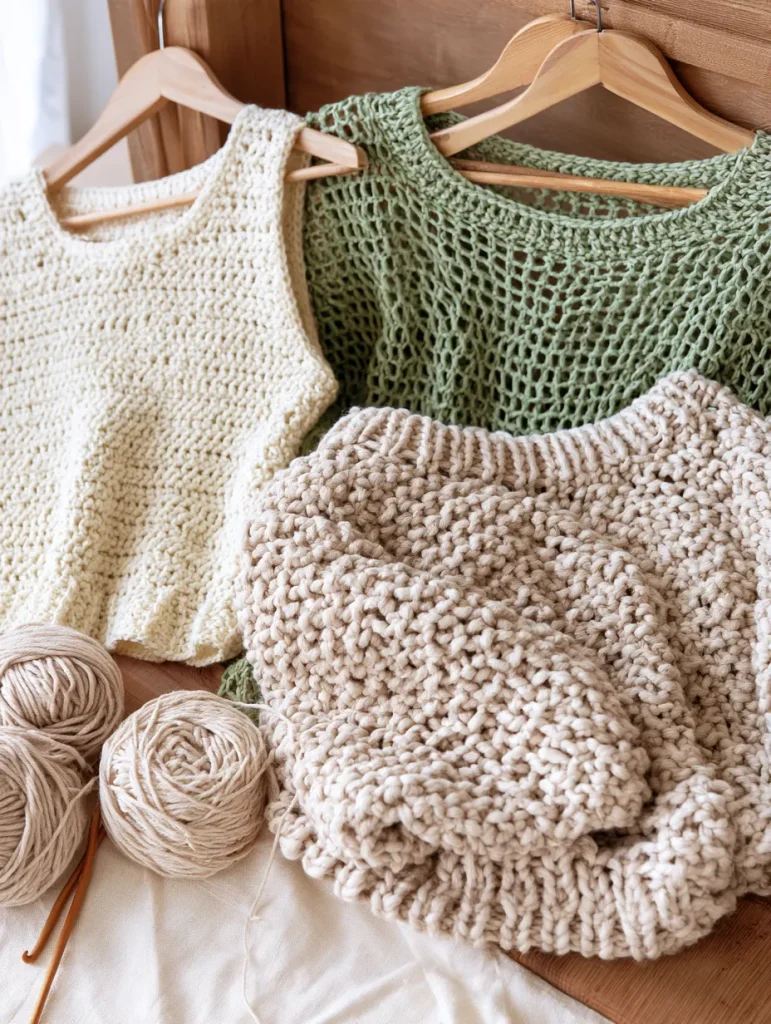
13. Simple Crochet Sleeveless Sweater
A sleeveless sweater or sweater vest removes one of the more time-consuming parts of sweater construction.
Without full sleeves, the project works up much faster.
A basic vest can be made from front and back panels with simple armhole openings.
This makes it a useful transition project before trying a full sweater.
14. Easy Crochet Mesh Sweater
A mesh sweater can work up quickly because the open stitch pattern uses less yarn.
Choose a simple repeated mesh stitch and a loose boxy construction.
These sweaters are especially useful for layering over tops or dresses.
Because the fabric is open, consistent tension is still important for keeping the finished piece neat.
15. Beginner Crochet Chunky Sweater
Chunky yarn makes stitches easier to see and helps sweaters work up faster.
A basic chunky sweater can be very beginner-friendly when the construction stays simple.
Use a larger hook and straightforward stitches.
The thicker fabric feels cozy, and the faster progress can make a larger project feel much less overwhelming.
What Is the Easiest Crochet Sweater Construction?
For many beginners, sweaters made from rectangles are the easiest place to start.
You crochet simple panels and seam them together.
Drop-shoulder pullovers and open-front cardigans often use this kind of construction.
Granny square sweaters can also be beginner-friendly because you repeat the same small motif several times.
The best option is usually the one whose construction makes the most sense to you when you read through the pattern.
What Yarn Is Best for a Beginner Crochet Sweater?
A smooth medium-weight yarn is usually a practical choice for your first sweater.
It lets you see your stitches clearly without making the garment too heavy.
Wool blends, acrylic, cotton blends, and other soft yarns can all work depending on the pattern.
Before starting, check:
- Yarn weight
- Fiber content
- Yardage
- Washing instructions
- Recommended hook size
When possible, buy enough yarn from the same dye lot so the color stays consistent throughout the sweater.
Why Is Gauge Important for Crochet Sweaters?
Gauge tells you how many stitches and rows fit into a specific measurement.
For wearable projects, that matters a lot.
If your stitches are much tighter or looser than the pattern designer’s, your sweater may end up smaller or larger than expected.
Make a gauge swatch before starting the full project.
If your swatch is too small, try a larger hook.
If it is too large, try a smaller hook.
How Do You Choose the Right Sweater Size?
Do not rely only on the size label.
Check the finished garment measurements in the pattern.
Measure around your chest or bust and compare that number with the pattern’s sizing chart.
Also look at the intended amount of ease.
Positive ease means the sweater is designed to be larger than your body measurement for a more relaxed fit.
A slightly relaxed fit can be easier to work with for a first garment than something very fitted.
Should Beginners Crochet Sweaters Top-Down or in Pieces?
Both methods can work well.
Sweaters made in pieces are often easier to understand because every panel has a clear shape.
Top-down sweaters have the advantage of letting you try the garment on while you work.
For your first sweater, choose whichever pattern instructions feel clearest to you.
Simple construction matters more than choosing one specific method.
How Long Does It Take to Crochet a Sweater?
The time depends on several things:
- Sweater size
- Yarn thickness
- Stitch pattern
- Crochet speed
- Construction style
A chunky cropped sweater may work up relatively quickly.
A full-size sweater made with thinner yarn can take much longer.
There is no need to rush your first sweater.
Working carefully, checking your measurements, and enjoying the process will usually give you a better result than trying to finish as quickly as possible.
Beginner Tips for Crocheting Your First Sweater
Read the full pattern before you begin.
Make a gauge swatch.
Measure yourself instead of guessing your size.
Use stitch markers to identify important points.
Count your stitches regularly.
Try the sweater on during construction when possible.
Check the sleeve and body lengths before finishing.
Weave in ends as you go if the pattern uses several colors.
Most importantly, choose a sweater you genuinely want to wear.
It is much easier to stay motivated through a larger crochet project when you are excited about the finished piece.
Your First Crochet Sweater Can Be Simple
You do not need advanced crochet skills to make something you can actually wear.
A sweater made from basic shapes and familiar stitches can still look beautiful.
Start with a relaxed construction, choose yarn you enjoy working with, and take your measurements carefully.
Your first sweater may not be absolutely perfect, and that is part of learning.
Every panel, seam, and sleeve teaches you something that makes the next garment easier.
Choose one beginner-friendly design and enjoy turning your yarn into something you can wear.