One of the trickiest parts of making amigurumi is often not the crocheting itself.
It is the sewing.
Attaching tiny arms, legs, ears, tails, and other pieces can take almost as much patience as crocheting the project.
That is why no-sew amigurumi patterns are such a great option, especially when you are still learning.
With no-sew amigurumi, most or all of the important pieces are crocheted directly onto the body instead of being made separately and stitched on later.
The result is a quicker project with fewer loose pieces to assemble.
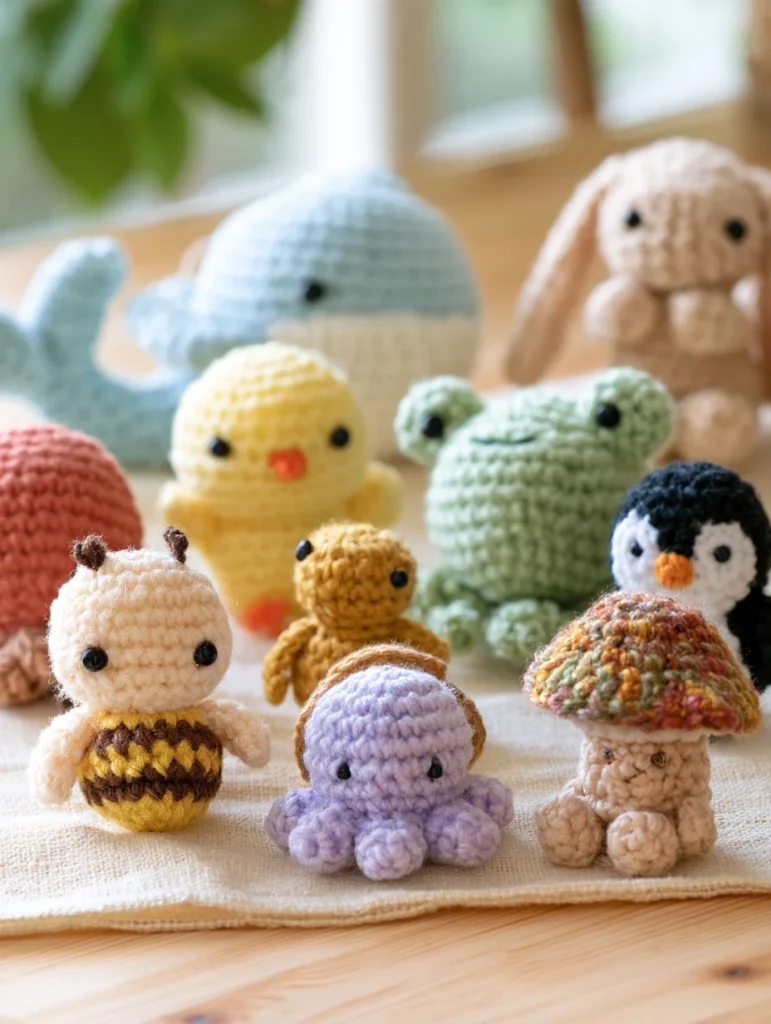
Here are 10 cute no-sew amigurumi ideas that are especially approachable for beginners.
What Does No-Sew Amigurumi Mean?
Traditional amigurumi patterns often ask you to crochet several pieces separately.
For example, you might make a body, head, two arms, two legs, ears, and a tail before sewing everything together.
No-sew designs reduce that assembly.
Some patterns crochet the limbs directly into the body while you work.
Others shape features such as ears or fins using stitches built into the main piece.
A pattern may still require a tiny amount of finishing, but the goal is to avoid sewing lots of separate crochet pieces together.
That makes these projects especially attractive when you want something small, quick, and satisfying.
1. No-Sew Crochet Bee
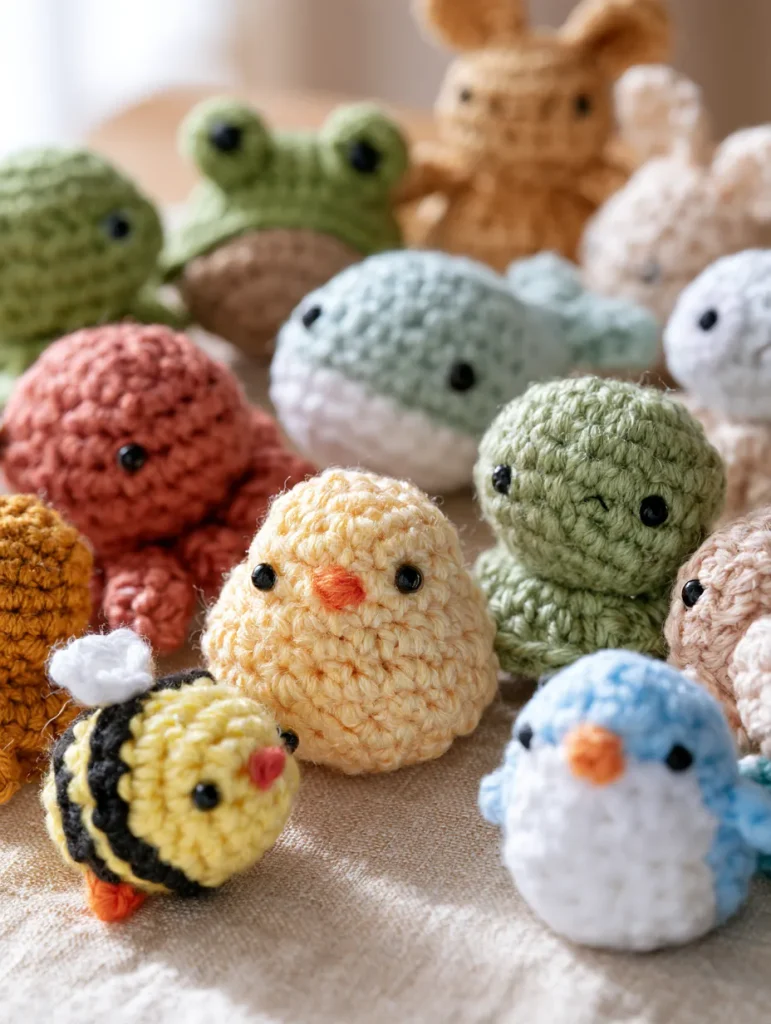
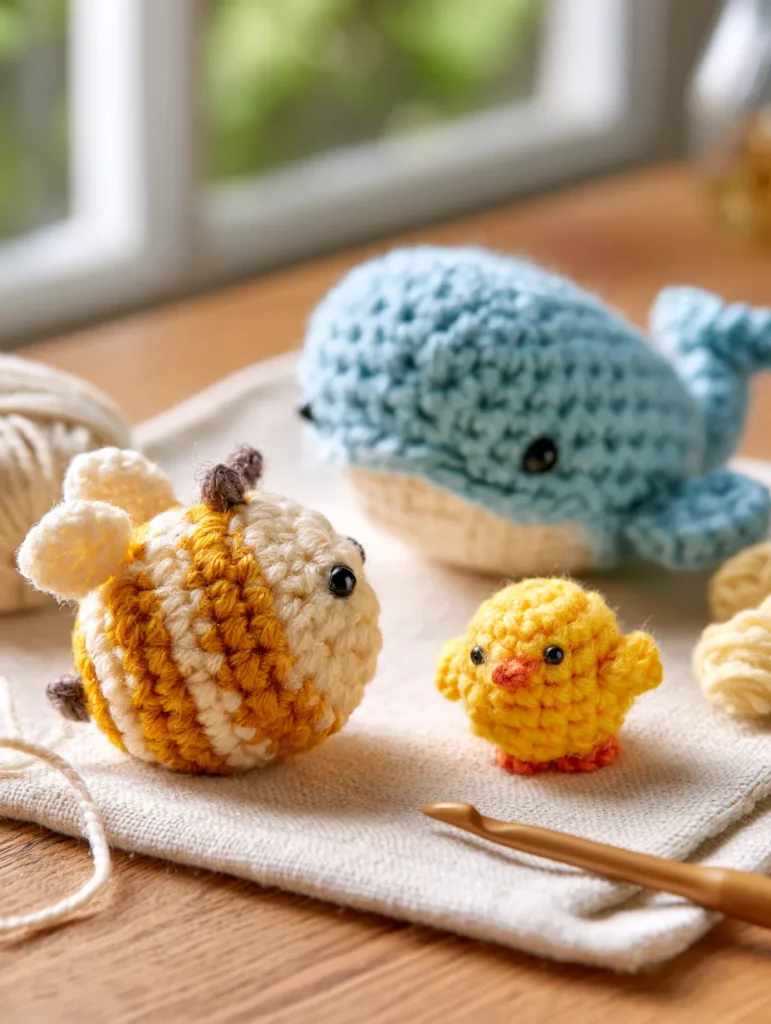
A tiny bee is one of the easiest no-sew amigurumi projects to try.
The body is naturally compact and can usually be crocheted as one continuous shape.
Color changes create the familiar stripes, while the wings can sometimes be crocheted directly into the body or incorporated with very little finishing.
The simple oval shape makes this a great introduction to working in continuous rounds.
Yellow, cream, mustard, brown, and black yarn all work well depending on the style you prefer.
2. No-Sew Crochet Chick
A round crochet chick is another beginner-friendly choice.
The body and head can often be created as one continuous piece.
Tiny wings can be worked directly into the sides, reducing the need for separate pieces.
Add a small embroidered or crocheted beak to finish the look.
A little chick is especially cute for spring and Easter crochet, but it works as a cheerful project all year.
3. No-Sew Crochet Whale
A small whale is ideal for no-sew construction because its body is naturally rounded.
The fins and tail can often be incorporated while crocheting rather than sewn on separately.
Choose soft blue for a classic whale or try sage, cream, lavender, or dusty pink for something different.
Because the main body is simple, this is a good project for practicing increases and decreases.
4. No-Sew Crochet Frog
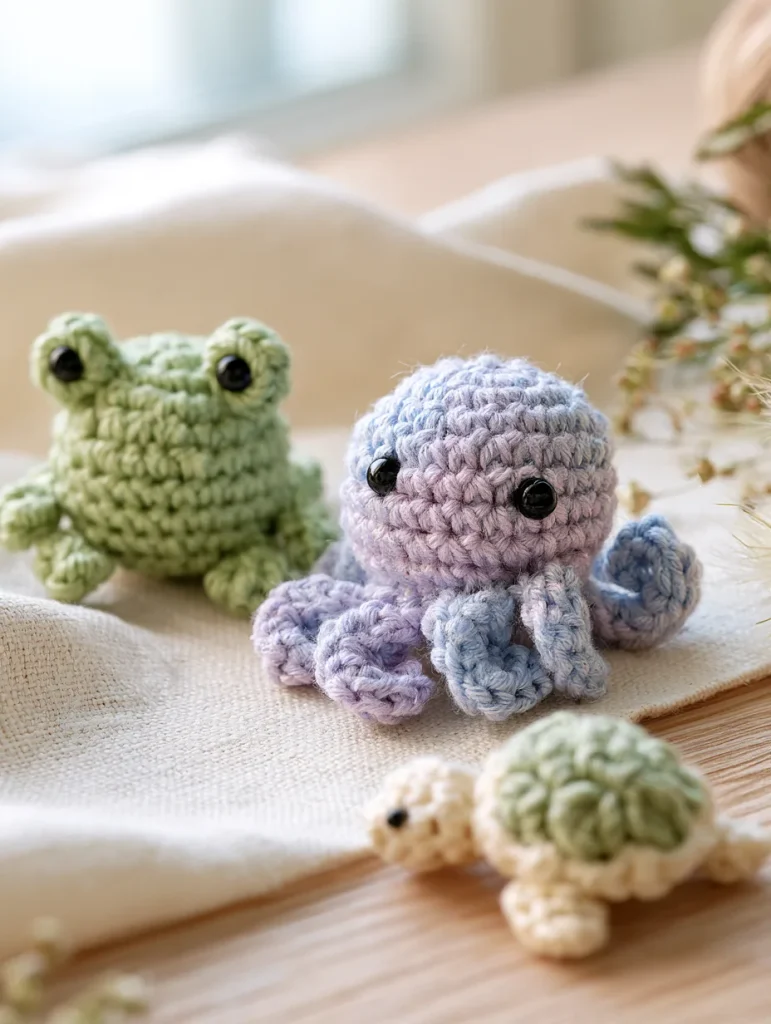
Small crochet frogs are perfect for playful no-sew projects.
The basic body can be kept simple and rounded.
Eyes and legs can sometimes be created directly as part of the crochet construction.
A soft sage green yarn fits beautifully with the natural Yumnivo palette, although brighter greens can make the project more playful.
Mini frogs also make cute desk companions, keychains, or small handmade gifts.
5. No-Sew Crochet Octopus
An octopus is one of the most recognizable small amigurumi shapes.
The head and body can be crocheted continuously, while the tentacles may be created directly from the lower edge.
This avoids having to sew eight separate pieces onto a tiny body.
Try soft blue, lavender, coral, cream, or sage yarn.
The repeating tentacles also make this project a fun way to practice consistent crochet.
6. No-Sew Crochet Turtle
A mini turtle can be made surprisingly simple.
Some no-sew designs allow the legs, head, and tail to be worked directly as you crochet around the shell.
The shell gives you a fun opportunity to combine colors.
Try:
- Sage and cream
- Olive and beige
- Terracotta and cream
- Soft blue and gray
A tiny turtle looks especially charming when made with clearly defined cotton stitches.
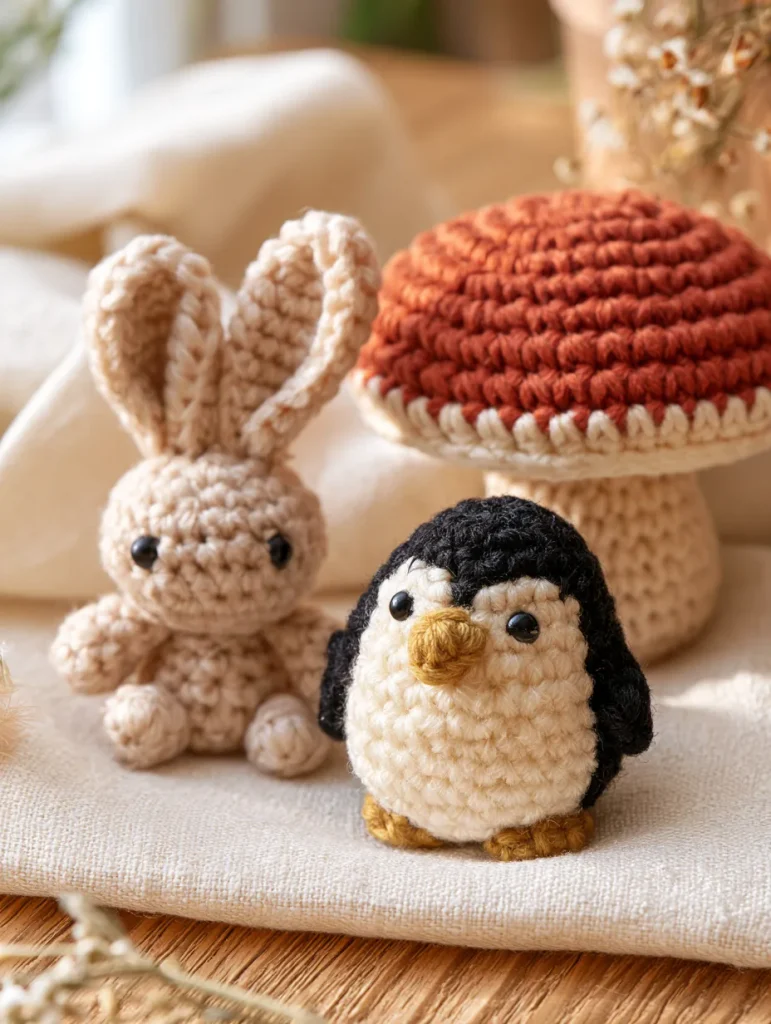
7. No-Sew Crochet Bunny
A bunny may sound like it requires lots of sewing, but some clever patterns incorporate the ears, arms, or legs directly into the body.
Look for a simple rounded bunny rather than a highly detailed realistic design when you are starting.
Cream, beige, dusty pink, or soft gray yarn creates a gentle handmade look.
A tiny bunny works beautifully as a spring decoration, bag charm, small gift, or nursery accent.
8. No-Sew Crochet Penguin
A mini penguin is another compact amigurumi project that can work well with minimal assembly.
The body can be made as one piece while small wings may be incorporated directly into the sides.
Use dark charcoal or black yarn with cream or white for the belly.
A tiny mustard or orange beak adds the finishing touch.
Because the shape is simple, penguins are especially nice winter crochet projects.
9. No-Sew Crochet Mushroom
Not every amigurumi project needs to be an animal.
A tiny crochet mushroom is simple, decorative, and ideal for using leftover yarn.
Some designs work the cap and stem together or minimize finishing by incorporating the shapes directly into one construction.
Try traditional red and cream or choose more earthy colors such as:
- Rust
- Beige
- Mustard
- Brown
- Sage
Mini mushrooms make cute autumn decorations, keychains, or additions to woodland-themed amigurumi collections.
10. No-Sew Crochet Mini Bear
A small round bear is a lovely next step once you are comfortable with basic amigurumi.
Choose a pattern where the ears and limbs are incorporated while crocheting the body.
Keeping the proportions simple makes the project much easier.
Warm beige, caramel, brown, cream, or gray yarn all work beautifully.
A tiny bear can become a keychain, desk decoration, gift topper, or small handmade keepsake.
Why Are No-Sew Amigurumi Patterns Good for Beginners?
No-sew projects remove one of the most frustrating parts of amigurumi assembly.
Sewing small pieces evenly can be difficult when you are still learning.
One arm may end up higher than the other, or an ear may sit at a slightly different angle.
When those details are crocheted directly into the project, positioning becomes easier.
No-sew patterns can also help you finish projects faster.
That quick sense of progress is useful when you are learning because you get more opportunities to complete projects and practice the same core techniques.
What Skills Do You Need for No-Sew Amigurumi?
Even simple no-sew projects usually require a few basic amigurumi skills.
It helps to know:
- Magic ring
- Single crochet
- Increasing
- Decreasing
- Working in continuous rounds
- Changing colors
- Counting stitches
- Using a stitch marker
You do not need to master everything before starting.
A simple bee, chick, or whale can help you practice these techniques gradually.
What Yarn Is Best for Beginner Amigurumi?
Smooth yarn is generally easier for beginners because you can clearly see the stitches.
Cotton yarn gives excellent stitch definition and creates a neat finished appearance.
Acrylic yarn is another practical option and is available in many colors.
Medium or light-medium yarn is usually easier to handle than very thin yarn when you are learning.
Try to avoid very fuzzy yarn for your first projects.
The fibers can hide individual stitches and make it harder to see exactly where your hook should go.
What Crochet Hook Should You Use?
Amigurumi fabric needs to be fairly tight so the stuffing stays inside.
For this reason, amigurumi often uses a crochet hook slightly smaller than you might normally choose for the same yarn.
Always check the specific pattern recommendation.
If you notice large gaps between your stitches after adding stuffing, try a slightly smaller hook.
Your stitches should be firm without becoming painfully difficult to work into.
What Do You Need to Make No-Sew Amigurumi?
Your basic supplies will usually include:
- Yarn
- Crochet hook
- Stuffing
- Stitch marker
- Yarn needle
- Scissors
- Safety eyes or embroidery thread
Even though the project is described as no-sew, keeping a yarn needle nearby is useful for weaving in yarn ends.
If the amigurumi will be given to a baby or very young child, consider embroidered facial features instead of small removable safety eyes.
How Do You Keep Track of Amigurumi Rounds?
A stitch marker is one of the most helpful tools for amigurumi.
Most small animals are worked in continuous rounds rather than joined rows.
Place your marker in the first stitch of each new round.
Move it upward every time you begin another round.
This makes it much easier to know where each round starts and prevents losing your place.
It is also worth counting your stitches regularly.
Finding an extra or missing stitch immediately is much easier than discovering the problem several rounds later.
Tips for Better No-Sew Amigurumi
Keep your tension consistent.
Amigurumi should be firm enough to hold stuffing without large gaps.
Do not overstuff.
Too much filling can stretch the stitches and change the shape.
Stuff gradually as you work.
This makes it easier to distribute the filling evenly.
Count frequently.
Small projects have fewer stitches, which means even one missing stitch can noticeably affect the shape.
Use a stitch marker.
It is easy to lose the beginning of a round without one.
Choose simple projects first.
A round bee or chick is much easier than a highly detailed animal with complicated shaping.
What Can You Do With Small No-Sew Amigurumi?
These tiny projects have plenty of uses beyond simply displaying them.
You can turn them into:
- Keychains
- Bag charms
- Desk decorations
- Handmade gifts
- Nursery decorations
- Seasonal decor
- Garland pieces
- Gift toppers
- Small collectibles
You can also make several animals using the same color palette and create a matching handmade collection.
Start With the Simplest Shape
You do not need to begin with the most impressive amigurumi design you can find.
A small bee, chick, whale, or mushroom is enough to teach you important skills.
Once you understand how increases and decreases shape the body, how stuffing changes the form, and how continuous rounds work, more detailed projects become much easier.
No-sew amigurumi lets you spend more time crocheting and less time assembling tiny pieces.
Choose one simple project, grab a small amount of yarn, and enjoy watching it take shape.